
You finally did it. The baby is asleep. You completed the bedtime routine, placed them gently in the crib, and tiptoed out of the room. A sense of relief washes over you. Your evening has just begun. You sit down, take a deep breath, and then you hear it. The monitor lights up with a cry. A quick look at the clock confirms your fear. It has only been 45 minutes. This is the classic false start bedtime, and it can be incredibly frustrating.
If this scene feels familiar, know you are not alone. False starts are a very common sleep issue for babies. They are not a sign of failure on your part. Instead, they are a clear signal from your baby. They are telling you that something is making it hard for them to connect their first sleep cycle of the night to the next one. A baby's sleep cycle is short, often just 45 to 50 minutes long. The false start happens when they wake up at the end of that first cycle and can't get back to sleep on their own.
The good news is that you can solve this problem. This guide will give you a clear, step-by-step plan. You will learn how to become a sleep detective. You will find the root cause of your baby's false starts and fix it for good. Soon, your evenings will be yours again.
Is It a False Start? The 3-Point Checklist
Before you start changing schedules, you need to be sure you are dealing with a true false start. This specific waking pattern has a unique cause. Other night wakings have different solutions. For example, it is important to understand the difference between a false start and a split night. Using the wrong solution can make sleep problems worse. This simple checklist will help you confirm that a false start is what's happening.
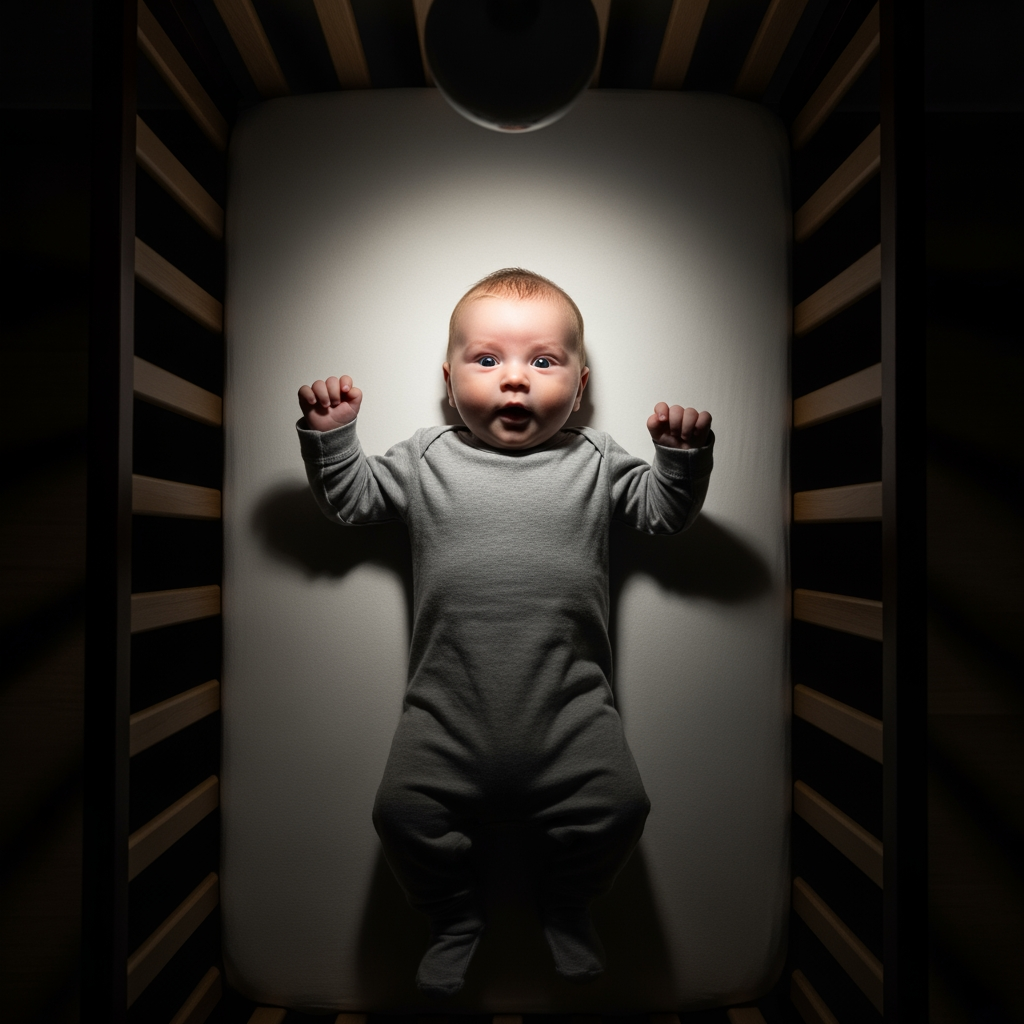
Run through these three points. If you answer "yes" to all of them, you are in the right place. You can confidently move on to the next troubleshooting steps. This clarity is the first step toward solving the issue and getting more predictable evenings for your family. If your issue does not match this pattern, you may be facing a different kind of night waking that needs another approach.
- Timing: Does your baby wake up 30 to 60 minutes after falling asleep for the night? This timing is the key marker. It lines up perfectly with the end of their first sleep cycle.
- State: Does your baby wake up fully and cry? Are they clearly distressed and need your help to get back to sleep? This is different from a baby who just stirs, grunts, or briefly opens their eyes before settling again.
- Context: Is this happening only at bedtime? Waking after 45 minutes from a daytime nap is simply a short nap. A false start is specifically about the wake-up that happens after you have put your baby down for their long nighttime sleep.
For newborns under three or four months old, these false starts can be a normal developmental phase. Their internal clocks, or circadian rhythms, are still maturing. Their natural bedtime might be later, like 9 or 10 PM. As they grow, their bedtime will naturally shift earlier and the false starts often disappear. For older babies, however, a consistent false start is almost always a sign of a problem with their schedule or routine that you can fix.
Step 1: Become a Sleep Detective – The Overtired vs. Undertired Test
The most common cause of false starts is a scheduling issue. Your baby is either overtired or undertired when you put them down for the night. This is a problem of sleep pressure. Think of sleep pressure like a beach ball you hold underwater. All day long, every moment your baby is awake, you are pushing that ball further down. This builds sleep pressure. At bedtime, you want the ball pushed down deep enough so it stays submerged for a long time. If it is not pushed down enough (undertired), it pops right back up after a short time. This is a false start.
On the other hand, if you push the ball down for too long, your arm gets tired and shaky. This is like an overtired baby. Their body is exhausted, but it is also flooded with stress hormones like cortisol. This makes them feel wired and jumpy. They crash into sleep but cannot stay asleep because their system is on high alert. Your first job as a sleep detective is to figure out which of these two problems you are facing. How your baby acts at bedtime and when they wake up will give you all the clues you need.

The Overtired Baby
An overtired baby has been awake for too long before bedtime. Their body has started to produce cortisol to keep them going. This is a stress hormone that acts like adrenaline. It fights against the sleepy hormone, melatonin. The result is a baby who is 'tired but wired.' They may seem hyperactive or extremely fussy during the bedtime routine. Many parents mistake this for the baby not being tired, but it is actually one of the clearest signs of an overtired baby. When you finally put them in the crib, they might fall asleep very quickly, almost 'crashing' in under 10 minutes. But this is a fragile, shallow sleep. When they reach the end of their first sleep cycle around 45 minutes later, the high cortisol level in their system can jolt them fully awake. They often wake up crying frantically and are very difficult to soothe back to sleep. The solution here is counterintuitive for many parents: you need an earlier bedtime or a shorter final wake window.
The Undertired Baby
An undertired baby is the opposite problem. They have not built up enough sleep pressure to make it through the night. This often happens if their last nap was too long or too late in the day. It can also happen if their final wake window is too short for their age. An undertired baby will take a very long time to fall asleep at bedtime, often more than 25 or 30 minutes. They might lie in the crib happily, babble, or roll around. They might also protest or cry because they simply are not tired enough to sleep yet. When they finally do fall asleep, the false start happens because their sleep pressure is low. It runs out after one cycle, and they wake up feeling refreshed, as if from a short nap. They are often happy and alert, ready to play. The solution for an undertired baby is to gently lengthen the last wake window before bed.
Use the table below to diagnose your baby's state at bedtime. Track their behavior for a day or two. This will give you a clear picture of whether you need to shorten or lengthen their awake time before bed. This single adjustment is often the key to ending false starts.
| Symptom | Likely Overtired | Likely Undertired |
|---|---|---|
| Falling Asleep | Falls asleep in under 10 minutes, seems to "crash." | Takes 25+ minutes to fall asleep, may be playful. |
| Bedtime Mood | Fussy, crying, or "wired" during the routine. | Calm or playful, resists being put down to sleep. |
| The Wake-Up | Wakes up crying, frantic, and is hard to resettle. | Wakes up happy, alert, and ready to engage. |
| The Fix | Shorten the last wake window by 15 mins. | Lengthen the last wake window by 15 mins. |
The Action Plan: How to Adjust Wake Windows
Once you have a strong idea of the problem, it is time to act. But it is vital to make changes slowly and methodically. Do not make drastic changes to your baby's schedule overnight. This can backfire and create more sleep problems. Instead, adjust the final wake window of the day in small, 15-minute increments. If you think your baby is overtired, shorten the last wake window by 15 minutes. This might mean you need to start the bedtime routine earlier. If you believe your baby is undertired, add 15 minutes of awake time before you start the routine.
After making one small change, you must be patient. Stick with the new schedule for at least three to five days. It takes time for a baby's internal clock to adjust. Changing things every day will only lead to confusion for both you and your baby. During this time, keep a simple log. Note what time naps ended, when bedtime started, and if a false start happened. This data will show you if you are moving in the right direction. If you need more guidance on how to structure your day, you can learn to create a custom infant routine based on age-appropriate guidelines. This can help take the guesswork out of daily schedules.
Step 2: Analyze the Sleep Environment & Routine
If you have adjusted your baby's schedule and are still having false starts after a week, it is time to move to step two. Your next investigation focuses on external factors. The bedtime routine and the sleep environment send powerful signals to your baby's brain. These cues tell them it is time for a long, restorative sleep. If these signals are weak, confusing, or stimulating, they can disrupt the transition from wakefulness to deep sleep. This can easily cause a wake-up after the first sleep cycle. A perfect schedule will not work if the environment is not right.
This step involves a careful audit of what happens in the 30-60 minutes before bed and the conditions of the room where your baby sleeps. Small changes in these areas can have a huge impact on your baby's ability to connect sleep cycles. We will break this down into two parts. First, we will look at the bedtime routine itself. Second, we will examine the physical sleep space. Follow these steps methodically to ensure every external factor is optimized for sleep.

Audit Your Bedtime Routine
A good bedtime routine is predictable, calming, and consistent. It should happen in the same order every night. This helps your baby understand what is coming next. But some common routine habits can accidentally cause false starts. The first thing to check is the placement of the final feeding. Many parents feed their baby right before putting them in the crib. If the baby falls asleep while eating, they create a powerful feed-to-sleep association. When they wake up 45 minutes later, their brain says, 'I need to be eating to go back to sleep.' To fix this, move the feeding to the very beginning of the bedtime routine. Follow it with a diaper change, pajamas, a book, and a song. This breaks the link between food and sleep.
Next, look for any 'second wind' triggers. These are activities that might seem calming but are actually stimulating for your baby. A warm bath is a great example. For many babies, it is relaxing. But for some, it is exciting and playful, raising their heart rate right before bed. If this is your baby, try moving bath time to earlier in the day. Also, watch out for a quick doze during the final feed. Even a five-minute nap can be just enough to reduce sleep pressure. It acts like a reset button, making it harder for them to take a long stretch of sleep. The 30 minutes before bed should be calm, quiet, and low-key.
Audit the Sleep Space
The room where your baby sleeps should be a 'sleep cave.' It must be optimized for uninterrupted rest. The three most important factors are darkness, sound, and temperature. First, the room needs to be pitch black. We are talking a 10 out of 10 on the darkness scale. You should not be able to see your hand in front of your face. Light is a primary signal to the brain that it is time to be awake. Even a small amount of light from a streetlamp or a hallway can disrupt the production of melatonin. It can be enough to prevent your baby from transitioning into their next sleep cycle. Use blackout curtains and cover any small electronic lights with electrical tape.
Second, consider sound. A completely silent room can actually be unsettling for a baby. They are used to the constant, loud whooshing sounds of the womb. Silence makes every little house creak or distant siren seem loud and jarring. A continuous white noise machine is a fantastic tool. It creates a consistent, soothing soundscape that masks these disruptive noises. This helps your baby stay asleep through the brief arousal that happens between sleep cycles. Finally, check the room temperature. The American Academy of Pediatrics recommends a room temperature between 68-72°F (20-22°C) for safe sleep. Being too hot or too cold is a common reason for poor sleep. Overheating is also a safety risk, so it is crucial to dress your baby appropriately in a sleep sack instead of using loose blankets.
Step 3: Rule Out Deeper Issues
You have perfected the schedule. The sleep environment is a dark, cool cave with soothing white noise. Yet, the 45-minute intruder still arrives every night. If you have diligently worked through steps one and two, it is time to consider less common but important underlying causes. These issues often go beyond simple scheduling and routine adjustments. They may require more specific interventions or even a conversation with your pediatrician. Do not get discouraged. This is the final layer of your investigation, and it ensures you are covering all possible bases.
This step involves looking for hidden culprits that can prevent a baby from settling into deep, continuous sleep. These can range from physical discomfort to deep-seated habits that need a more direct approach to change. Think of this as the fine-tuning stage. Your work on schedule and environment has already built a strong foundation for healthy sleep. Now, we are looking for the one missing piece of the puzzle that will finally resolve the false starts for good. Let's explore these potential deeper issues one by one.
- Check for Discomfort: Pain or discomfort is a major sleep disruptor. If a baby is uncomfortable, they will struggle to enter and stay in a deep sleep state. Teething is a common culprit. Look for signs like excessive drooling, chewing on hands, and swollen gums. Silent reflux is another possibility, where stomach acid comes up and causes a burning sensation. A key sign of reflux is a baby arching their back in pain, especially when laid flat. Congestion from a cold or allergies can also make it hard to breathe comfortably. If you suspect any form of pain or discomfort is causing the false starts, it is essential to consult your pediatrician. They can provide a proper diagnosis and recommend safe ways to manage the issue.
- Check for Hunger: While hunger is less likely to be the cause if your baby had a full feeding right before bed, it is still worth considering. Is your baby getting full, effective feeds during the day? Sometimes, daytime snacking can lead to a baby not getting enough calories, making them genuinely hungry at night. Ensure they are awake and actively eating during their pre-bed feed, not just comfort nursing. If your baby consistently seems ravenous when they wake up, try offering a slightly larger feeding before bed or ensuring their daytime meals are substantial. For younger infants, cluster feeding in the evening is normal and may be necessary.
- Check for Sleep Associations: This is one of the most powerful causes of false starts. A sleep association is anything your baby needs to fall asleep. This could be rocking, holding, feeding, or a pacifier. If your baby relies on you to get them to sleep at the beginning of the night, they will almost certainly need you again when they wake up 45 minutes later. They have not yet learned the skill of falling asleep on their own. The solution is to help them develop independent sleep skills. You can do this by practicing the 'drowsy but awake' method. Put your baby down in their crib when they are calm and sleepy, but not fully asleep. This gives them the chance to practice the final step of falling asleep by themselves. It can take time and consistency, but it is a skill that will serve them for years to come.
Your Go-Forward Plan: Ending False Starts for Good
You now have a complete toolkit to diagnose and solve your baby's false start bedtimes. Remember that this is a process of elimination. Always start with the most likely cause and work your way down the list. The hierarchy is simple and logical: first, fix the schedule. Then, optimize the environment. Finally, address deeper issues like sleep associations or discomfort. This structured approach prevents you from feeling overwhelmed and helps you pinpoint the exact cause of the problem.

The single most important key to success is consistency. Once you make a change, give your baby's body time to adjust. Stick with your new approach for at least three to five days before deciding if it is working. Flipping between different strategies will only confuse your baby and delay progress. Trust the process and be patient. Throughout all of this, always adhere to the American Academy of Pediatrics' safe sleep guidelines. Your baby should always sleep Alone, on their Back, and in a Crib or bassinet. This foundation of safety is non-negotiable.
False starts are a temporary phase. They are a puzzle that you have the power to solve. By methodically working through these steps, you are teaching your baby a valuable skill and reclaiming your evenings. You are giving your entire family the gift of more predictable, restful nights. You can do this.