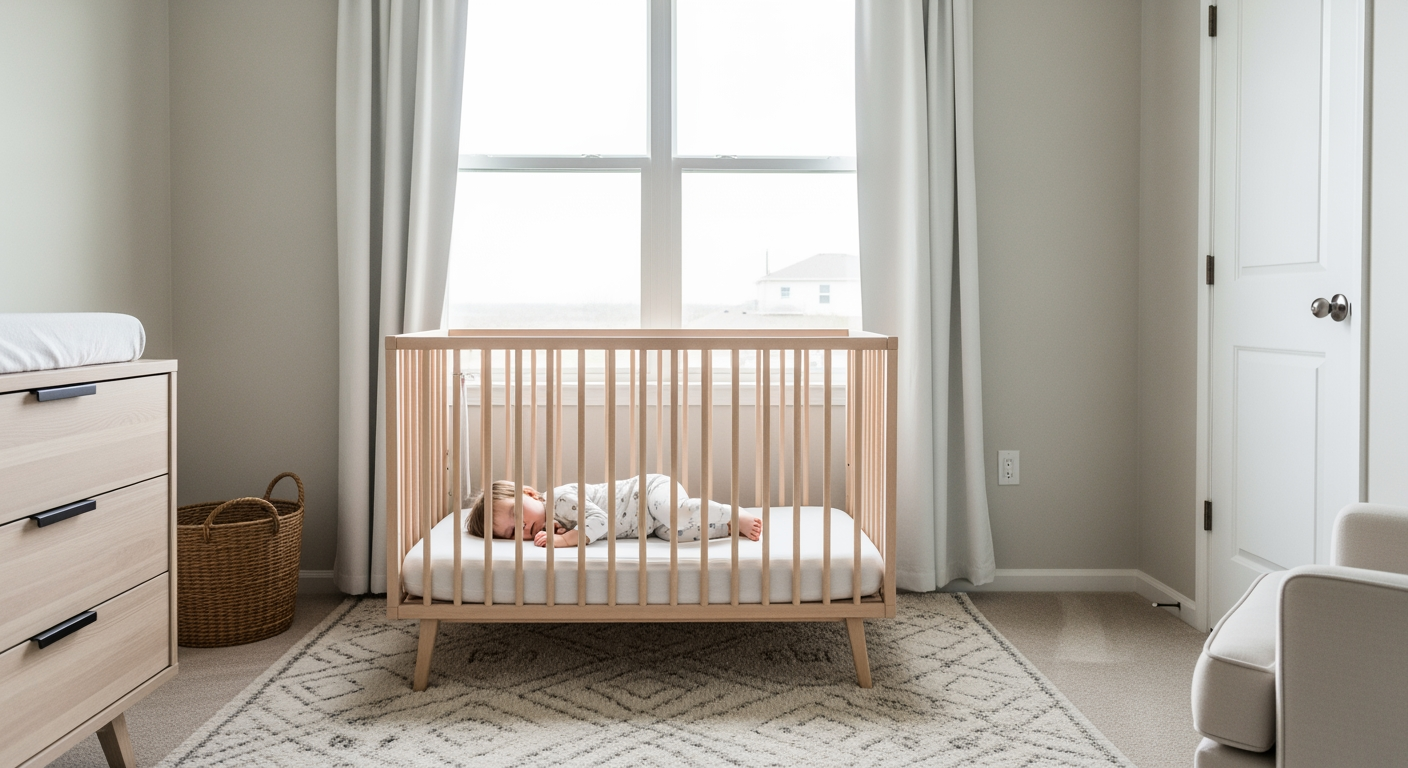
Your one-year-old's sleep can feel like a puzzle. One day, you have a predictable napper. The next day, every nap is a battle. If you feel confused and tired, you are not alone. This is a very common challenge for parents. Many toddlers go through a big sleep change around this age. It can be hard to know what to do.
The biggest change is the move from two daily naps to just one. This is called the 2-to-1 nap transition. It often causes messy schedules and fussy toddlers. You might wonder if your child is ready. Or maybe you are dealing with a temporary sleep problem. It is hard to tell the difference.
This guide is here to help. We made it for beginners who need clear answers. You will learn how much sleep your toddler needs. We will give you a simple checklist to see if your child is ready for one nap. You will also get two clear paths to follow. One path is for keeping two naps. The other shows you how to gently move to one nap. You will end with a clear plan for more restful days.
How Much Sleep Does a 1-Year-Old Actually Need? The 2026 Guidelines
Before changing any schedules, it helps to know the goal. Understanding your child's total sleep needs provides a clear target. According to the American Academy of Sleep Medicine, toddlers between one and two years old need a lot of rest. They should get between 11 and 14 hours of total sleep every 24 hours. This total includes both nighttime sleep and daytime naps.

Think of it like a daily sleep budget. Your toddler has about 14 hours of sleep to 'spend' each day. Most of this budget is used overnight. A typical one-year-old sleeps for 10 to 12 hours at night. This leaves a smaller budget of about 2 to 3 hours for daytime naps. This nap time can be split between two shorter naps or consolidated into one long nap. Knowing this helps you see why dropping a nap too soon can be a problem. It can leave your child short on the total sleep they need to grow and thrive.
The Big Question: 2 Naps or 1? A 5-Point Checklist for Beginners
This is the most common question for parents of one-year-olds. Is my child ready to drop a nap? Many parents think that fighting a nap automatically means it is time to transition. However, this is often not the case. A temporary sleep regression can look like readiness to drop a nap. Dropping a nap too early can lead to an overtired toddler, which makes sleep even harder. This simple checklist will help you look at the whole picture. Use these five points to decide if your child is truly ready.

- 1. Age: Is your child between 13 and 18 months old? Most children are not ready to move to one nap right at their first birthday. The most common age for this transition is between 13 and 18 months. If your child is only 12 months old, their nap resistance is more likely due to a developmental leap, like learning to walk or talk.
- 2. Nap Refusal: Are they consistently fighting one nap? Consistency is the key word here. A few days of fighting the afternoon nap is normal. However, if your child has refused the second nap for one to two full weeks, it could be a sign. This refusal should happen even when you have tried adjusting wake windows.
- 3. Nap Duration: Have their nap patterns changed? There are two common scenarios. First, the morning nap becomes very long, and there is simply not enough time for an afternoon nap before bedtime. Second, both naps become very short, like 30-45 minutes each. This can show that their sleep needs are shifting.
- 4. Bedtime Battles: Has bedtime become a struggle? If your toddler used to go to sleep easily but now plays in their crib for an hour, they might be getting too much daytime sleep. The same is true for early morning waking. Waking for the day at 5 AM can be a sign that their schedule needs an adjustment.
- 5. Happy Demeanor: Can they handle a missed nap? Pay attention on days when life gets in the way and they accidentally miss their second nap. Are they able to make it to bedtime without a major meltdown? If they are generally happy and just a little tired, it shows they may be building the stamina for a one-nap day.
If you answered 'yes' to most of these questions, your child might be ready to transition. If you answered 'no' or were unsure, it is best to stick with two naps for a while longer. The next section provides a clear plan for those who are not ready for the change.
Path A: The Optimized 2-Nap Schedule (If Your Toddler Isn't Ready)
If your checklist results show that your one-year-old still needs two naps, do not worry. This is very common, especially for children between 12 and 13 months old. Your goal is not to force a transition but to make the current two-nap schedule work as smoothly as possible. Often, a few small adjustments can solve recent nap problems. The key is focusing on wake windows. A wake window is the amount of time your toddler is awake between sleeps. For a one-year-old on two naps, these windows are usually between 3 and 4 hours long. A consistent routine built around these windows can bring back predictability.
Here is a sample schedule that works well for many one-year-olds who still need two naps. Remember that this is just a template. You can adjust the times to fit your child's natural rhythm. The most important parts are the length of the wake windows and the total amount of sleep. This structure provides a solid foundation for your day and helps prevent your child from becoming overtired.
| Time | Activity | Wake Window |
|---|---|---|
| 7:00 AM | Wake for the day | |
| 7:00 AM – 10:00 AM | Play, Breakfast, Activity | 3 hours |
| 10:00 AM – 11:30 AM | Nap 1 (1.5 hours) | |
| 11:30 AM – 3:00 PM | Wake, Lunch, Play | 3.5 hours |
| 3:00 PM – 4:00 PM | Nap 2 (1 hour) | |
| 4:00 PM – 7:30 PM | Wake, Snack, Play, Dinner | 3.5 – 4 hours |
| 7:30 PM | Bedtime |

What If They Fight the Second Nap?
This is one of the most common struggles. Your child takes a great morning nap but then refuses the afternoon one completely. This often happens because there is not enough 'sleep pressure' built up. Sleep pressure is the natural drive to sleep that builds during wakeful hours. If the morning nap was too long or the wake window before the second nap is too short, your child simply will not be tired enough. The first step is to cap the morning nap. Try waking your toddler after 90 minutes. This preserves their sleep budget for the afternoon.
Next, look at the wake window before that tricky second nap. It should be one of the longest of the day, around 3.5 to 4 hours. If your current window is only 3 hours, try stretching it by 15 minutes. A little more awake time can make a big difference. Making sure you know how many naps a 12-month-old needs can give you confidence in sticking with two naps. A consistent pre-nap routine also signals to your child that it is time to wind down, making them more receptive to sleep.
What If Naps are Suddenly Short?
Sudden short naps, or 'catnaps', are very frustrating. When a toddler who used to sleep for over an hour suddenly wakes after 45 minutes, it can disrupt the whole day. This is a classic sign of the 12-month sleep regression. A regression is a temporary setback in sleep that happens when your child is mastering a big new skill. Their brain is so busy learning to walk, talk, or climb that sleep gets pushed aside. It is like a computer that runs slowly when a major software update is happening in the background.
The best response is patience and consistency. Do not assume you need to make a big schedule change. First, try slightly lengthening the wake window before the short nap. A child who is not quite tired enough may struggle to connect sleep cycles. Adding just 15 minutes of awake time can often solve the problem. It is also helpful to get gentle support for the 12-month sleep regression to navigate this phase without stress. Remember, regressions are temporary and usually pass within a few weeks if you stick to your routine.
Path B: How to Gently Transition to a 1-Nap Schedule
If you reviewed the checklist and are confident your toddler is ready for one nap, it is time to make the change. However, you do not have to switch 'cold turkey'. A sudden change can be jarring for a little one and lead to weeks of overtiredness. A gradual and gentle approach is usually more successful and less stressful for everyone. The goal is to slowly merge the two naps into one longer, more restorative midday nap. This process takes patience and flexibility. It can take anywhere from two to four weeks to fully settle into the new routine. The following steps will guide you through the process smoothly.

This transition is a significant milestone in your child's development. Understanding the full process can make you feel more prepared. There is a lot to learn about the 2 to 1 nap transition which can help you troubleshoot along the way. Be prepared for some bumpy days, and remember that it is okay to be flexible.
- Start Shifting the Morning Nap. This is the most important step. You do not drop the afternoon nap; you push the morning nap later until it takes the place of both. Start by pushing the first nap later by 15 to 30 minutes every few days. For example, if the nap is usually at 10:00 AM, move it to 10:15 AM for three days. Then move it to 10:30 AM for another three days. The ultimate goal is a nap that starts around 12:00 PM or 12:30 PM.
- Cap the Nap (If Needed). In the beginning, this new midday nap might be short. Your child's body is still adjusting. They might wake up after 45 minutes, just like they did during their old morning nap. This is normal. Be patient. It can take a few weeks for their body to learn how to take one long, restorative nap. Resist the urge to add back a second nap, as this can confuse the process. Instead, focus on the next step.
- Use an Early Bedtime. This is your secret weapon during the transition. On days with a short nap or no nap, your toddler will be very tired. To prevent overtiredness, move their bedtime earlier by 30 to 60 minutes. If bedtime is normally 7:30 PM, put them down at 6:30 PM or 7:00 PM. This is a temporary measure to help them catch up on lost sleep. An overtired child sleeps worse, so an early bedtime is crucial for success.
- Try 'Quiet Time'. In the late afternoon, your toddler might still hit a wall of exhaustion. They may not be tired enough for a full nap, but they need a break. This is where 'quiet time' comes in. Set them up in their crib or a safe play space with some books or quiet toys for about 30 minutes. The goal is not sleep but rest. This quiet break can help them recharge enough to make it to their early bedtime without a meltdown.
- Be Flexible. The transition from two naps to one is rarely a straight line. It is more like a zig-zag. You will have good one-nap days mixed with days where your child is exhausted and clearly needs two naps. That is okay. On those tough days, it is better to offer a second catnap in the afternoon than to push an overtired child to bedtime. Follow your child's cues and know that consistency over time is what matters most.
The Goal: A Sample 1-Nap Schedule for Your Toddler
After a few weeks of transition, you will settle into a new, predictable rhythm. The one-nap schedule offers a lot of freedom. You will have a long, uninterrupted stretch in the morning and another in the afternoon for activities and errands. The goal is a single, long nap in the middle of the day that leaves your child feeling refreshed and happy. This new schedule will have much longer wake windows, typically around 5 to 6 hours on either side of the nap.

Here is what a typical one-nap day might look like. Again, use this as a guide and adjust it to your family's needs. The key is that the nap is long enough (2-3 hours) to get your child through the day happily.
| Time | Activity | Wake Window |
|---|---|---|
| 7:00 AM | Wake for the day | |
| 7:00 AM – 12:00 PM | Play, Breakfast, Snack | 5 hours |
| 12:00 PM – 2:30 PM | Nap (2.5 hours) | |
| 2:30 PM – 7:30 PM | Wake, Lunch, Play, Dinner | 5 – 5.5 hours |
| 7:30 PM | Bedtime |
Your Next Steps for Predictable Naps
Navigating your one-year-old's nap schedule is a journey. This transition is a phase, and it will pass. The most important thing you can do is be patient with your child and with yourself. Watch your child's sleep cues closely. A yawn, eye rubbing, or fussiness are clear signs they are getting tired. These cues are more reliable than the clock, especially during a transition.

Remember to protect their total sleep. Use an early bedtime whenever naps are short or missed. It is the best tool you have to prevent a cycle of overtiredness. Above all, know that every child is different. Some will transition quickly, while others will take a month or more. The goal is not a perfect schedule on paper. The goal is a happy, well-rested child. By following these steps and trusting your instincts, you can guide your family to more peaceful and predictable days.
If you find yourself feeling overwhelmed by the process, personalized help is available. Sometimes, a step-by-step plan tailored to your specific child is what you need to find success. Exploring guided programs can offer expert support to get you through this tricky stage with confidence.