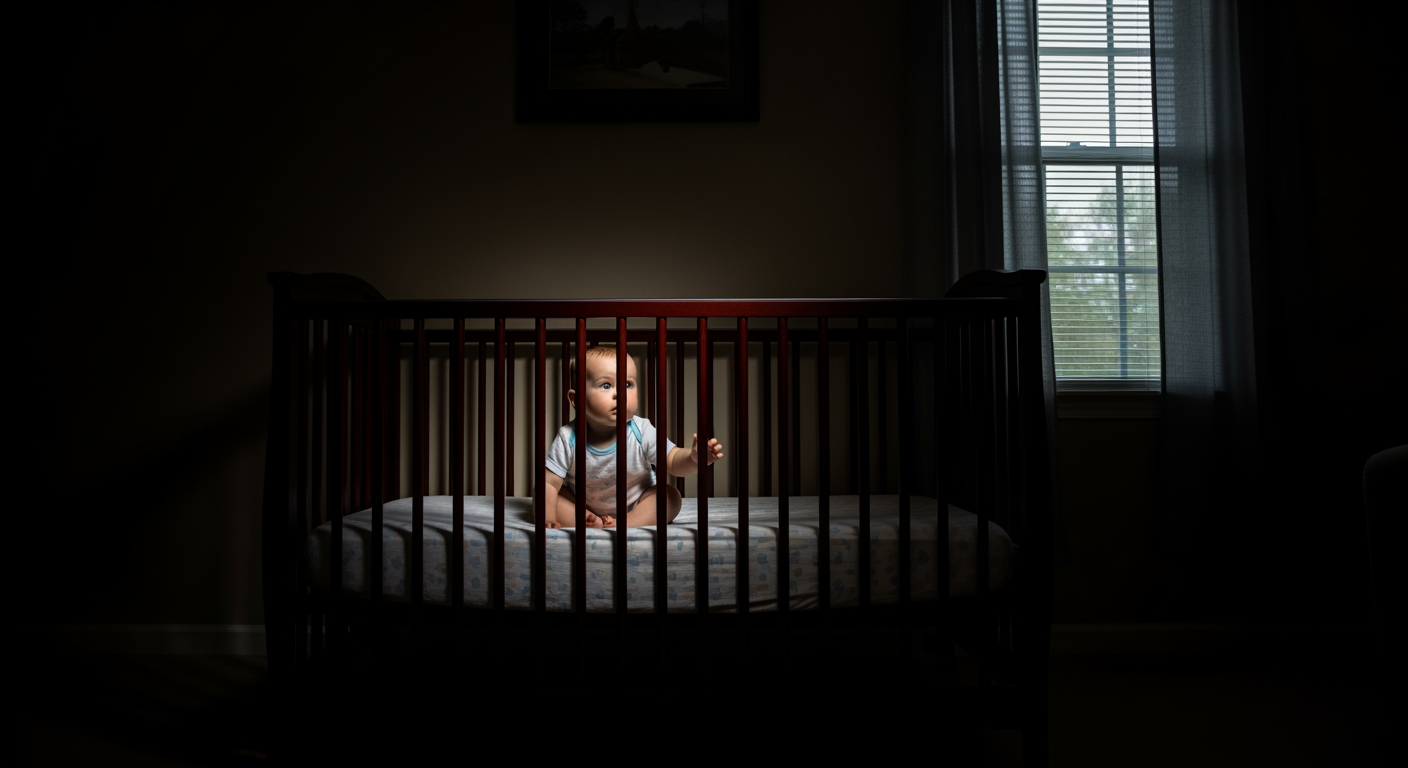
It is 2 a.m. You should be asleep. Instead, you are listening to happy sounds from the nursery. Your baby is wide awake and showing no signs of going back to sleep. This is the infamous "midnight party." It is confusing and exhausting for parents. You feel tired and may wonder what you are doing wrong. The good news is, you are not alone in this struggle.
This frustrating pattern is called a "split night." It happens when a baby wakes for a long period overnight but seems content. These long wakings are not random. They are caused by a specific imbalance in your baby's internal sleep systems. Understanding this imbalance is the first step to solving the problem. It is a common issue with a clear, biological cause.
This guide will help you end these nightly parties. We will dive deep into the science behind split nights. You will learn why they happen and what they are not. Most importantly, you will get a step-by-step plan to troubleshoot the issue. This process will help you reclaim your nights and get your whole family the rest they need.
What Is a Split Night? (And What It's Not)
A split night is a very specific type of night waking. It is not just any disruption. A true split night has clear features. The waking lasts for a long time, usually between one and three hours. During this time, your baby is not in distress. They are often happy, alert, and even playful. They babble, roll around, or practice new skills in their crib. This happy mood is a key sign. They resist your efforts to get them back to sleep because they simply are not tired.

These wakings often become a pattern. They happen multiple times a week, usually around the same time. Many parents notice the "party" starts between 2 a.m. and 3 a.m. It is important to know what a split night is not. It is different from a sleep regression. A sleep regression is a temporary setback in sleep tied to development. It can cause many types of sleep issues, not just long, happy wakings. A split night is also not caused by teething or illness. These issues typically cause fussy or painful wakings. If your baby is crying and seems uncomfortable, you are likely dealing with a different problem. Understanding why your baby is not sleeping through the night requires looking at their specific behaviors.
So, what causes this strange event? It all comes down to two main sleep systems in the body. Think of them as a team that needs to work together. The first system is sleep pressure, which acts like a "Sleepiness Battery." This battery starts charging the moment your baby wakes up. The longer they are awake, the more sleep pressure builds. Naps drain this battery a small amount to help them make it to bedtime. The second system is the circadian rhythm, or the "Internal Master Clock." This clock is set by light and dark cycles. It tells the brain when to release sleepy hormones like melatonin.
A split night is a biological glitch. It happens when these two systems get out of sync. The Sleepiness Battery may not have enough charge to last the whole night. Or, the Internal Master Clock might be confused, thinking 2 a.m. is a time to be awake. When the drive to sleep is low but the body clock isn't promoting sleep, your baby wakes up feeling refreshed. They have slept just enough to feel rested, but not enough to make it until morning. The rest of this guide will show you how to get these two systems working together again.
The 2 Core Causes: Is Your Baby Undertired or Overtired?
Parents often hear that sleep problems come from an overtired baby. While overtiredness does cause issues, it is rarely the cause of a true split night. The main culprit for these long, happy wakings is the opposite problem: being undertired. An undertired baby has had too much sleep during the day or gone to bed too early. There simply is not enough sleep pressure built up to keep them asleep for a full 10-12 hours overnight. Their "Sleepiness Battery" is not charged enough.

When a baby is overtired, their body releases stress hormones like cortisol. This makes it hard for them to settle down and stay asleep. An overtired baby might fight sleep, cry hysterically at bedtime, and wake up frequently throughout the night. These wakings are usually short and fussy. The baby is clearly tired but cannot connect sleep cycles. This is very different from the calm, alert state of a baby during a split night. Recognizing the difference between a false start and a split night is also key, as they have different causes and solutions.
To fix the problem, you must first correctly diagnose it. Look for the distinct signs of being undertired versus overtired. This will guide your troubleshooting and ensure you make the right schedule adjustment. The table below breaks down the key differences in behavior.
| Feature | ✅ Undertired (The Usual Suspect for Split Nights) | ❌ Overtired (Less Common for Split Nights) |
|---|---|---|
| Night Waking | One long, happy "party" lasting 1-2 hours. | Multiple, frequent wakings; often crying or fussy. |
| Bedtime Behavior | Takes a long time to fall asleep but is often playful or babbling. | Fights sleep hysterically; "wired" and crying. |
| Daytime Mood | Generally happy and well-rested during the day. | Fussy, cranky, easily overstimulated. |
| Nap Behavior | May resist naps or take short naps because sleep pressure is low. | Fights naps but is clearly exhausted; "crashes" for sleep. |
As the table shows, the evidence for a split night almost always points to an undertired baby. Their total amount of awake time in a 24-hour period is not high enough for their age. This means you need to adjust their schedule to increase their sleep pressure before bed. This can be done by capping daytime naps or pushing bedtime a little later. The goal is to make them sleepier at the right time, so their sleep is consolidated at night.
Your 5-Day Troubleshooting Plan: A Step-by-Step Process to Fix Split Nights
Fixing split nights requires a careful and systematic approach. Randomly changing things can make the problem worse. You need to become a sleep detective for your child. This 5-day plan will walk you through a logical process. It helps you gather data, make a single targeted change, and evaluate the results. This method empowers you to find the exact cause and implement the right solution. Follow these steps closely for the best chance of success.

- Day 1-2: Gather Your Data (The Sleep Log). For the first two days, do not change anything about your baby's schedule. Your only job is to observe and record. Be meticulous. You need accurate data to find the pattern. Track the following times: morning wake-up time, the start and end of every nap, when you put your baby down for bed, and the actual time they fall asleep. Crucially, log the exact time the split night starts and ends. This information is the foundation for your entire plan.
- Day 2 (Evening): Analyze for Patterns. With two days of data, you can now look for the problem. Calculate the total daytime sleep your baby is getting. Compare this to the average needs for their age (we cover this in the next section). Is it too high? Next, look at the wake window before bed. This is the time between the end of the last nap and bedtime. Is it too short? The data will almost always show a need for more total awake time in the 24-hour day. Your log will point you to the most likely adjustment.
- Day 3: Make ONE Targeted Adjustment. This step is critical. Based on your analysis, make only one small change to the schedule. Do not try to fix everything at once. If you change too many things, you will not know what worked. For example, if your baby's naps seem too long, cap the total daytime sleep by 15-20 minutes. You might do this by waking them a little earlier from their last nap. If the wake window before bed seems too short, push bedtime 15 minutes later. Choose one strategy and commit to it.
- Day 3-5: Stay 100% Consistent. A baby's internal clock does not reset instantly. It needs time to adjust to a new routine. You must be completely consistent with your one change for at least three to five days. This is the hardest part. If a split night happens, do not let your baby sleep in the next morning to "catch up." This creates a negative feedback loop. Waking them at their normal time helps protect the new schedule and allows sleep pressure to build correctly for the following night.
- Day 5 (Evening): Evaluate and Re-Adjust. After several days of consistency, look at your results. Is the split night gone? Is it shorter? If you see improvement, you have found the right solution. Stay with it. If the split night is exactly the same, you may need to make another small adjustment. For example, you could reduce daytime sleep by another 15 minutes or push bedtime later by another 15 minutes. Then, hold this new schedule for another 3-5 days. Be patient. Systematic changes are the key to lasting success.
Age-Specific Schedules & Adjustments
A baby's sleep needs change quickly during the first few years. What works for a 7-month-old will not work for a 14-month-old. To effectively troubleshoot a split night, you must compare your baby's sleep log to age-appropriate targets. This personalization is crucial for success. A generic schedule will not solve a specific problem. You need to understand the common pitfalls for your child's age group. For example, knowing when nap transitions happen can help you spot the cause of a new split night pattern. Creating an age-based infant routine that fits your baby's needs is the best way to promote healthy sleep.
The following sections provide concrete schedule examples and common issues for two key age brackets. Use these as a starting point for your analysis. Remember that every baby is different. These are averages, and your child may need slightly more or less sleep. Your sleep log is the ultimate source of truth. Use these guides to interpret your data and make informed decisions.

For Babies (6-12 Months): The 2-Nap Schedule
In this age range, most babies are on a stable two-nap schedule. As they get older, their total sleep needs decrease. A common cause of split nights is parents not adjusting the schedule to account for this change. A 10-month-old simply needs more awake time than a 6-month-old. Many parents use a "2-3-4" schedule, which means 2 hours of awake time before nap one, 3 hours before nap two, and 4 hours before bed. For some babies, this does not provide enough total awake time, leading to split nights.
Total daytime sleep for this age should be around 2.5 to 3.5 hours. If your baby is getting more than this, it is a likely cause of the issue. You may need to cap one or both naps to increase sleep pressure for the night. Many babies in this range do better with longer wake windows, such as 3 hours before the first nap and 3.5-4 hours before the second nap and bedtime. Here is a sample schedule you can aim for:
- Wake-up: 6:30 AM
- Nap 1: 9:30 AM (after ~3 hours awake)
- Nap 2: 2:00 PM (after ~3.5 hours awake)
- Bedtime: 7:00 PM (after ~3.5-4 hours awake)
For Toddlers (12-24+ Months): The 1-Nap Transition & Beyond
Split nights are a classic sign that your toddler is ready to drop from two naps to one. This transition typically happens between 13 and 18 months. If your toddler is in this age range and suddenly starts having long night wakings, it is very likely time to make the switch. They no longer need two naps to make it through the day. Trying to force two naps will result in low sleep pressure at night.
If your toddler is already on one nap, a split night means that single nap is probably too long or happening too early. A toddler's single nap should generally not exceed 2 to 2.5 hours. Letting them sleep for 3 hours in the afternoon can steal sleep from the night. The wake windows on a one-nap schedule are much longer, often 5 hours or more. The nap should be in the middle of the day to balance the awake time. Here is a sample one-nap schedule:
- Wake-up: 7:00 AM
- Nap: 12:30 PM (after ~5.5 hours awake)
- Bedtime: 7:30 PM (after ~5 hours awake)
In-the-Moment Strategy: What to Do During the Wake-Up
While you are working on adjusting your baby's schedule, the split nights may continue for a few days. How you respond during these wake-ups is very important. Your goal is to avoid reinforcing the behavior. You want to send a clear message: nighttime is for sleeping, not for playing. The key is to be as boring and uninteresting as possible. This removes any reward for being awake. Creating an exciting environment will only encourage the midnight parties.

It can be hard to stay calm and boring at 3 a.m. when you are exhausted. Having a clear plan before the wake-up happens can help you stick to your goals. Follow these simple dos and don'ts to manage the situation effectively. Consistency here, combined with your schedule changes, will resolve the issue faster.
- DO: Keep the room as dark and boring as possible. Darkness signals to the brain that it is time for sleep. Avoid turning on any lights.
- DO: Keep interactions minimal and uninteresting. You can offer brief, quiet comfort if they are upset. Say a calm phrase like "It's sleepy time," then give them space.
- DON'T: Turn on lights, TV, or bring them out of the bedroom. This signals that nighttime is for playing and will make the problem worse.
- DON'T: Offer a feed unless it is a normal, scheduled feeding time for their age. Creating a new feeding habit can add another layer to the problem.
Your Path to Peaceful Nights
Split nights are incredibly frustrating, but they are not a mystery you have to endure. They are a fixable schedule problem. You now have the knowledge and tools to solve it. The solution lies in understanding the science of sleep. You need to balance your baby's sleep pressure and their circadian rhythm. This is achieved by systematically adjusting their awake time to build enough sleepiness for a full night of rest.

Remember the key takeaways. Split nights are almost always a sign of an undertired baby. The 5-day troubleshooting plan is your road map. Gather data, make one small change, and be consistent. Do not get discouraged if the problem does not vanish overnight. It takes several days for a baby's body clock to adapt to a new routine. Your patience and consistency are the most critical parts of the process.
You are now equipped to be your child's sleep detective. You can end the midnight parties and restore peace to your nights. Trust the process and your ability to analyze your child's unique needs. Start by keeping a sleep log tomorrow. The data you collect will light the path forward to better sleep for your entire family.