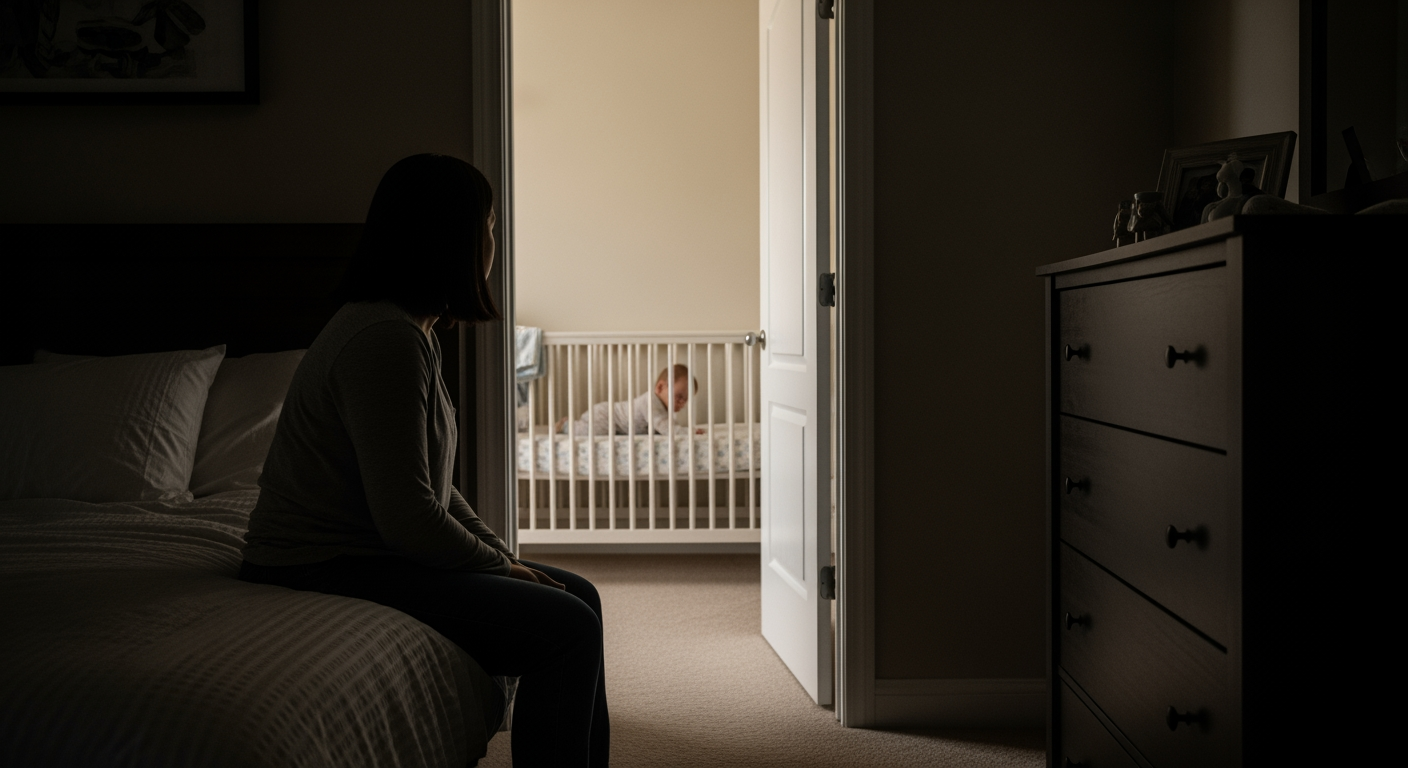
It is 3 AM. The house is dark and quiet. But in one room, the party is just getting started. Your baby is wide awake, babbling, and ready to play. You, on the other hand, are exhausted and confused. This middle-of-the-night party is called a 'split night.' It is a long period where your baby is alert and not easily put back to sleep. This can last for one to three hours, leaving parents feeling desperate for answers.
If this sounds familiar, you are not alone. Split nights are a very common issue, especially for babies between 6 and 24 months old. The good news is that they are almost always solvable. Your baby is not a 'bad sleeper.' Instead, this is often a simple biological problem. Their internal sleep systems are just a little out of sync. Understanding two key concepts can help you fix this problem for good.
This guide will show you exactly why split nights happen. We will explore the science of your baby's sleep in simple terms. You will learn how to tell if your baby is overtired or undertired. Most importantly, you will get a clear, step-by-step plan to end the 3 AM parties and get everyone back to sleeping through the night.
The Science of Split Nights: Your Baby's Sleep Battery & Body Clock
A split night happens when two powerful systems in your baby's body fall out of sync. These systems are the homeostatic sleep drive and the circadian rhythm. Think of them as a team that works together to manage sleep. When they work well, your baby sleeps soundly through the night. When they do not, you might find yourself with a wide-awake baby in the middle of the night. Understanding how each system works is the first step to solving the problem.

The first system is the homeostatic sleep drive. A simple way to think about this is as a 'sleepiness battery' or 'sleep pressure.' The longer your baby is awake, the more sleep pressure builds up. This is like a battery charging. A full day of activity and appropriate wake windows charges this battery completely. By bedtime, the pressure to sleep is very high. This powerful drive helps your baby fall asleep easily and stay asleep. However, if the battery isn't charged enough, problems arise. Too much daytime sleep or a bedtime that is too early means there is not enough sleep pressure. Your baby might fall asleep at bedtime but then wake up after a few hours feeling totally refreshed. Their sleepiness battery has run out too soon.
The second system is the circadian rhythm. This is your baby's internal 24-hour 'body clock.' It tells their body when to feel sleepy and when to feel alert. This clock is programmed mainly by light and darkness. When your baby is exposed to bright, natural light in the morning, their clock starts the 'daytime' program. It promotes alertness and activity. As darkness falls in the evening, the body clock signals the brain to produce melatonin. This is the hormone that makes us feel sleepy. A strong and consistent circadian rhythm helps your baby stay asleep during the night, even during lighter stages of sleep. If the body clock is off, it might think 2 AM is a perfectly fine time to be awake and alert. Inconsistent wake-up times, late naps, or exposure to bright light at night can all confuse this internal clock.
A split night is the result of these two systems clashing. The most common cause is low sleep pressure. Your baby naps too much or goes to bed too early. They fall asleep, but their 'sleepiness battery' is only half-full. After a few hours, around 2 or 3 AM, that battery is empty. They wake up. At this point, the circadian rhythm is supposed to take over and keep them asleep. But if their body clock is also weak or misaligned, it cannot overcome the lack of sleep pressure. The result is a baby who is not tired enough to fall back asleep and whose body clock isn't strongly signaling for sleep. They are awake, alert, and ready for their 'middle-of-the-night party.' Fixing split nights requires getting both the sleep battery and the body clock working together again.
The Real Culprit: Is Your Baby Overtired or Undertired?
When your baby wakes up at night, it is easy to assume they are overtired. Parents often hear that 'sleep begets sleep.' While this can be true, it is not the case for classic split nights. A split night, where a baby is awake for a long time but seems happy and playful, is almost always caused by the opposite problem: being undertired. This means your baby has had too much sleep in a 24-hour period. Their sleep needs are lower than the amount of sleep their schedule provides. This is the most critical distinction to make because the solutions for overtiredness and undertiredness are completely different.

An overtired baby has not had enough sleep. Their body is flooded with stress hormones like cortisol and adrenaline. This makes them 'wired' and fussy. They fight sleep at bedtime, cry intensely, and when they wake at night, they are often upset and hard to soothe. An undertired baby, on the other hand, simply isn't tired enough to stay asleep. They may take a while to fall asleep at bedtime but are usually calm. When they wake for their split night, they are not crying in distress. Instead, they are content, babbling, or practicing new skills like rolling. They are not in a state of stress; they are in a state of restfulness. It's important to understand the difference between issues like false starts and a true split night to apply the right solution. The following chart can help you diagnose the situation.
| Feature | Overtired Signs (Too Little Sleep) | Undertired Signs (Too Much Sleep / Main Cause of Split Nights) |
|---|---|---|
| Night Waking Mood | Wakes up crying, fussy, and hard to soothe. | Wakes up happy, playful, babbling, or 'partying'. |
| Bedtime Behavior | Fights sleep with intense crying, back arching; seems 'wired.' | Takes a long time to fall asleep but is often calm or playful in the crib. |
| Nap Quality | Takes short naps (30-45 minutes) and wakes up crying. | Takes very long naps or resists naps altogether but is in a good mood. |
| Common Wake-Up Time | Frequent wakings all night or a very early morning (4-5 AM). | One single long waking period (1-3 hours) after midnight. |
By reviewing this chart, you can become more confident in your diagnosis. If your baby's symptoms align with the 'Undertired' column, you are ready to move on to the action plan. Remember, the goal is not to reduce sleep just for the sake of it. The goal is to redistribute your baby's sleep more effectively across the 24-hour day. This ensures that sleep pressure is high at night when you want them to sleep for a long, consolidated stretch. Accurately identifying undertiredness is the key that unlocks the solution to split nights.
Your 4-Step Action Plan to End Split Nights
Once you have identified that being undertired is the likely cause, you can take action. This four-step plan works by systematically adjusting your baby's schedule to better match their biological needs. It rebuilds sleep pressure for the night and resets their internal clock. The key to success is consistency and patience. It can take 7 to 10 days for your baby's body to adjust to a new routine. Follow these steps in order for the best results.

- Step 1: Become a Detective (Track for 3 Days). Before you change anything, you need to know exactly what you are working with. For three full days, keep a detailed log of your baby's sleep. Write down the exact time they wake up in the morning, when each nap starts and ends, and when you put them down for bed. Also, note the time the split night begins and ends. This data is not just for observation; it is your baseline. It will show you how much sleep your baby is actually getting in 24 hours. This information is powerful. It removes guesswork and allows you to make precise, targeted changes to their schedule.
- Step 2: Adjust Daytime Sleep (The Biggest Lever). With your sleep log in hand, look at the total amount of daytime sleep. This is the most common area that needs adjustment. A baby's sleep needs decrease as they get older. The schedule that worked a month ago might provide too much sleep now. The goal is to reduce total daytime sleep slightly to increase sleep pressure for the night. Start by capping the last nap of the day. Wake your baby up 15-20 minutes earlier from that nap. Do this for 3-5 days and observe. If the split nights continue, reduce total daytime sleep by another 15 minutes. Make small, gradual changes. Drastic cuts can lead to overtiredness, which creates a new set of problems.
- Step 3: Shift Bedtime Later (If Naps Are Right). If you have reviewed your log and the total daytime sleep seems appropriate for your baby's age, the issue might be bedtime. An early bedtime is great for an overtired baby, but it can cause split nights in a well-rested one. If bedtime is too early, there has not been enough time to build adequate sleep pressure. To fix this, push bedtime later in small steps. Start by moving it 15 minutes later. Hold this new bedtime for three nights. If you do not see an improvement, shift it another 15 minutes later. A slightly later bedtime can provide just enough extra awake time to build the sleep pressure needed to sleep through the night.
- Step 4: Set a Consistent Morning Wake-Up. This step is crucial for setting your baby's internal body clock. After a long split night, it is tempting to let your baby sleep in. Do not do this. Waking your baby at the same time every morning (within a 30-minute window) is one of the most powerful tools you have. This consistent wake-up time acts as an anchor for their entire 24-hour rhythm. As soon as you wake them, expose them to bright, natural light. Open the curtains and let the sunlight in. This light exposure sends a strong signal to their brain that the day has begun, helping to lock in their circadian rhythm. Crafting the right schedule can sometimes feel complex, but you can learn to
What to Do *During* the 3 AM Party (A Mini-Guide)
Knowing how to fix the schedule is only half the battle. You also need a plan for what to do in the moment. How you respond during the split night itself can either reinforce the habit or help to resolve it. The goal is simple: be as boring as possible. You want to send a clear message that nighttime is for sleeping, not for playing. This might be difficult, especially when your baby is smiling at you, but it is essential for breaking the cycle.

Your response should be calm, quiet, and minimal. The environment needs to remain a sleep-conducive one. This means resisting the urge to start the day early or engage in stimulating activities. While you handle the waking, you are also working on the long-term schedule adjustments. Combining these two approaches is the fastest way to end split nights. For more detailed strategies, a split night troubleshooting guide can offer additional support. Here are the fundamental dos and don'ts to follow during the waking.
- DO keep the lights off. Light is the most powerful signal for the circadian rhythm. Turning on lights, even dim ones, tells your baby's brain to stop producing melatonin and start waking up. Keep the room as dark as possible.
- DO stay boring. This is your most important job. You can offer quiet comfort with a gentle hand or a soft shushing sound. However, you must avoid making eye contact, talking, singing, or smiling. These interactions are highly stimulating and reward your baby for being awake.
- DO stay in their sleep space. It is best to remain in the baby's bedroom if possible. This reinforces the strong connection between their crib, their room, and the act of sleeping. Leaving the room can signal that the sleep attempt is over.
- DON'T take them out to play or watch TV. This is the number one mistake that can lock in a split night for weeks or months. It confirms to your baby that being awake at 3 AM is fun and rewarding. The short-term relief is not worth the long-term habit.
- DON'T offer a feed unless you are certain they are hungry. For most babies over six months who are growing well, a split night is a schedule issue, not a hunger issue. Feeding can accidentally become a reward for being awake. If you are in the process of night weaning, stick to your plan.
Following these rules consistently teaches your baby that nothing interesting happens in the middle of the night. When the schedule adjustments start to work and their sleep pressure is higher, they will be more likely to fall back asleep on their own because there is no fun alternative.
When Your Schedule Is Perfect, But Split Nights Persist
Sometimes you might feel like you have the perfect schedule, but the split nights continue. You have capped naps, pushed bedtime later, and kept your mornings consistent. When the primary cause of being undertired has been addressed, it is time to look at other factors that can disrupt sleep. These secondary causes are often temporary or can be managed with some simple changes to your baby's daytime routine. Understanding these possibilities can help you fine-tune your approach and finally solve the puzzle of nighttime wakings.

Developmental Leaps (The 'Practicing New Skills' Phase)
Babies' brains are incredibly active. When they are on the verge of a major developmental milestone, their drive to practice can be stronger than their drive to sleep. Learning to roll, crawl, pull to stand, or talk can all lead to temporary split nights. Their brain is so busy processing the new skill that it can be hard to switch off. You might find your baby in their crib at 3 AM, happily practicing their new move over and over again. This is very common. The solution is not to change the sleep schedule, but to offer a huge amount of time to practice the new skill during daytime wake windows. If they are learning to pull up, spend lots of time near furniture where they can practice. If they are babbling new sounds, talk to them frequently. This helps get the urge out during the day so their brain can be quieter at night. These phases are usually short-lived and resolve in a week or two.
Lack of Activity and Sunlight
The sleep-wake cycle is not just about naps and bedtime; it is a 24-hour process influenced by the environment. Two of the most important environmental factors are sunlight and physical activity. Exposure to natural daylight, especially in the morning, is vital for setting a strong circadian rhythm. It sends the clearest signal to the brain that it is daytime. A lack of sunlight can lead to a weak or delayed body clock. Similarly, a baby needs enough physical activity to build up adequate sleep pressure. A day spent with too much passive time in a car seat or stroller may not build enough 'sleepiness' for the night. Ensure your baby gets plenty of floor time for tummy time, rolling, or crawling. Active play helps expend energy and contributes directly to their sleep pressure battery. A simple walk outside in the morning can address both of these needs at once.
The Nap Transition Trap
Split nights are a classic sign that a baby is ready to drop a nap. This often happens when moving from three naps to two, or from two naps to one. As babies get older, their sleep needs decrease. The old schedule, which used to be perfect, now provides too much daytime sleep. This leads to them being undertired at night. The transition period can be tricky. Some days they seem to need the extra nap, and other days they do not. This inconsistency can wreak havoc on nighttime sleep. If your baby is at a common transition age (around 6-9 months for the 3-to-2 nap transition, or 12-18 months for the 2-to-1 transition) and is consistently having split nights, it is a strong signal that their sleep needs have changed. You will need to begin the process of stretching wake windows and consolidating daytime sleep into fewer, longer naps. This is a direct response to their changing biology.
Your Next Steps to Resilient Sleep
Ending the 3 AM party is a process of re-synchronizing your baby's natural sleep systems. It is not about sleep training in the traditional sense, but about smart, responsive schedule management. By now, you understand that split nights are usually a sign of an undertired baby. The core strategy is simple: first, become a detective to understand your baby's current sleep patterns. Then, systematically adjust their daytime sleep or bedtime to build enough sleep pressure for a full night of rest. Finally, anchor their body clock with a consistent morning wake-up time.

Patience and consistency are your best friends in this journey. It takes time to shift a biological rhythm. Stick with any schedule change for at least a week before deciding if it is working. During the night, remember your role is to be loving but boring. By refusing to engage in the party, you are helping your baby learn that nighttime is for sleep. These steps empower you to solve the problem by working with your baby's biology, not against it.
If you have tried these steps consistently for two weeks and still feel lost, or if creating the right schedule feels overwhelming, it may be time for a more personalized plan. Every baby is different, and sometimes a more detailed blueprint is needed. Exploring age-based routines and guides can provide the exact structure you need to build a resilient sleep foundation for your family and say goodbye to split nights for good.