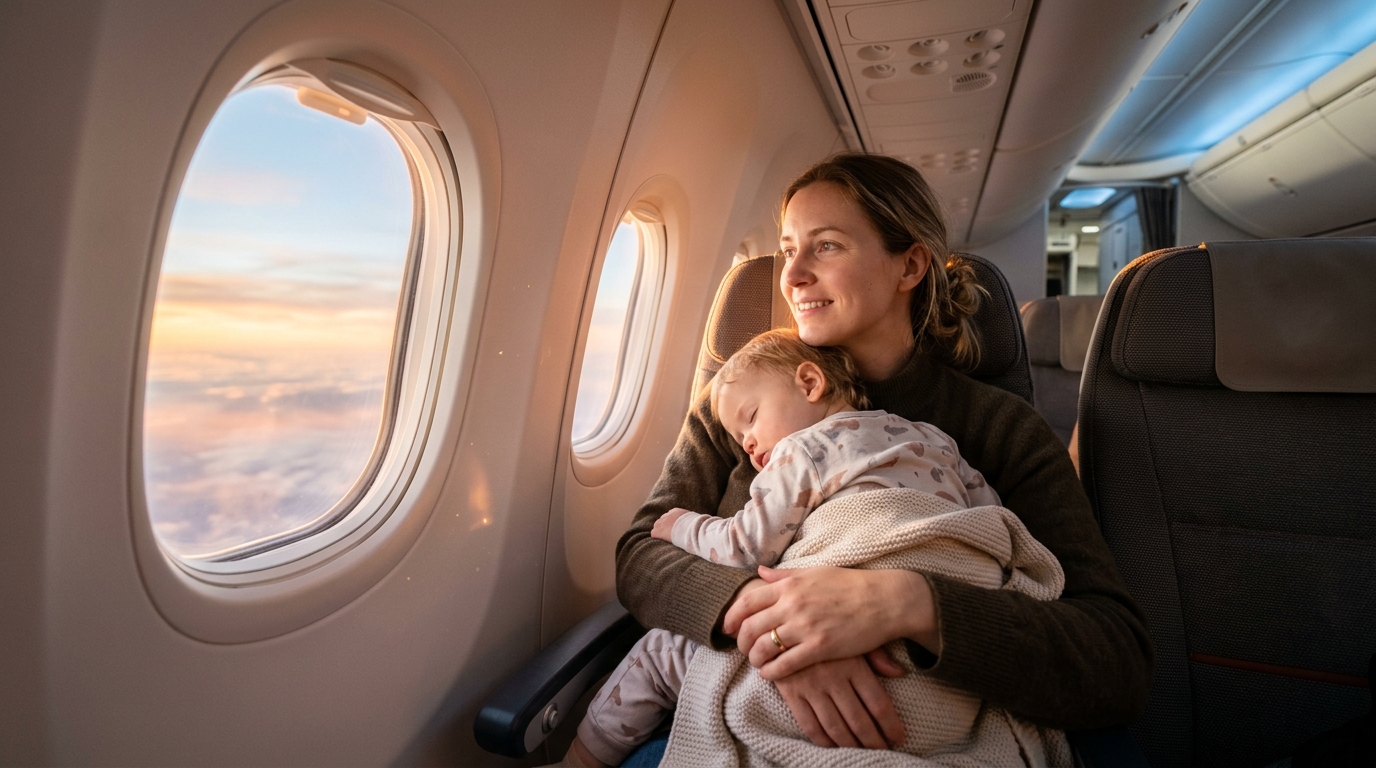
Planning a big trip with a little one brings a unique mix of excitement and anxiety. The main source of worry is often jet lag. You picture a dream vacation derailed by a child who is wide awake at 2 AM and melting down by lunchtime. This fear is valid. A tired, cranky child in a new place is a challenge for any parent.
Many parents hope for the best, assuming their child will adapt after a day or two. But true jet lag is not just travel fatigue. It is a biological mismatch between your child's internal clock and the new local time. The good news is that you don't have to leave it to chance. A proactive plan can significantly reduce the impact of jet lag, helping your entire family enjoy the trip from the start.
This guide provides a clear, step-by-step travel time zone adjustment plan for infants and toddlers. We will show you how to use simple tools like light, timing, and schedule shifts to gently guide your child's body clock. We offer separate plans for eastward and westward travel, as the strategy for each is different. With a few days of preparation, you can set your child up for sleep success.
The Science of Your Baby's Clock: Why Jet Lag Happens
To beat jet lag, it helps to understand what causes it. Every person, including your baby, has an internal clock. This is called the circadian rhythm. It runs on a roughly 24-hour cycle and tells your body when to sleep, when to wake, and when to eat. This master clock is a small group of cells in the brain called the suprachiasmatic nucleus, or SCN. The SCN takes its most powerful cues from light. Bright light in the morning says, "It's time to be awake!" while darkness at night signals, "It's time to sleep."
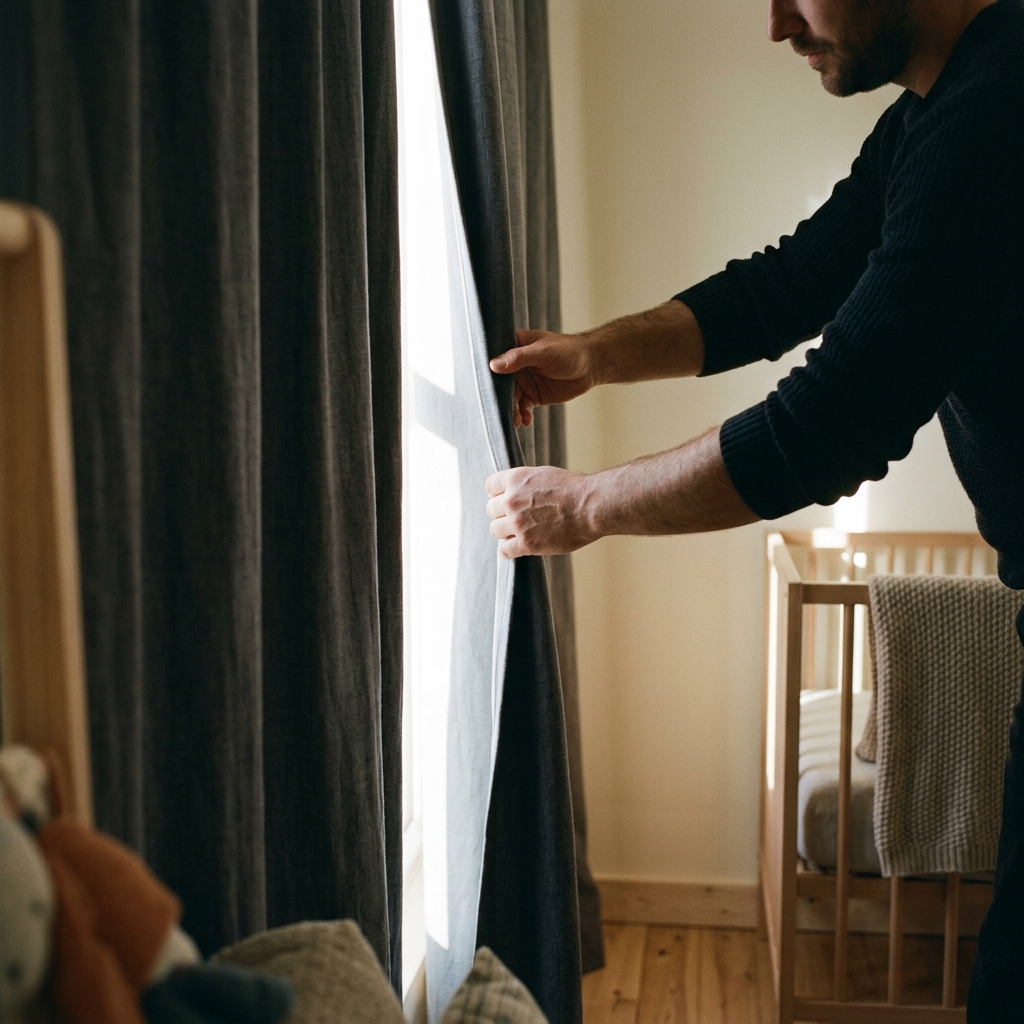
When you cross several time zones, this internal clock falls out of sync with the new local time. Your baby's body still thinks it is on home time. This circadian misalignment is jet lag. The results are familiar: difficulty sleeping at night, early morning waking, daytime sleepiness, and general crankiness. Your baby might also be hungry at odd hours or lose their appetite. Think of your child’s circadian rhythm as a stubborn internal manager. This manager is used to a strict schedule. Flying across the world is like asking them to suddenly start their day at 3 AM. They will be confused and perform poorly.
A travel adjustment plan is like giving this manager fair notice. By gradually changing their schedule and using light strategically, you help them ease into the new routine instead of throwing them into chaos. Without a plan, the general rule is that it takes about one full day to adjust for each hour of time zone change. For a six-hour time difference, that could mean nearly a week of disruption. A proactive plan can cut this adjustment period down to just a few days, saving your trip from being dominated by sleep battles.
The Golden Rules: East vs. West
The single most important factor in your adjustment plan is the direction of travel. The strategy for flying from New York to Paris (east) is the opposite of flying from New York to Hawaii (west). Understanding this difference is the key to an effective plan. Traveling east is generally harder because you are "losing" time and must force your body to sleep earlier than it wants to. Traveling west is typically easier, as you are "gaining" time and just need to stay up a bit later. Our body's natural clock is slightly longer than 24 hours, so delaying sleep is more natural than advancing it.

Before we dive into the day-by-day schedules, here is a simple breakdown of the two core strategies. Referencing this will help you understand the logic behind the steps in the following sections. This core approach is the foundation of any effective baby jet lag sleep plan.
| Strategy Component | Eastward Travel (e.g., US to Europe) | Westward Travel (e.g., US to Hawaii) |
|---|---|---|
| The Challenge | "Losing" time. You need to go to bed earlier. | "Gaining" time. You need to stay up later. |
| Difficulty | Harder. It's more difficult to force sleep than to delay it. | Easier. Your body's natural rhythm is slightly longer than 24 hours. |
| Schedule Shift | Shift sleep/wake times EARLIER before the trip. | Shift sleep/wake times LATER before the trip. |
| Light Exposure | Seek BRIGHT MORNING LIGHT upon arrival. Avoid evening light. | Avoid morning light. Seek BRIGHT AFTERNOON/EVENING LIGHT upon arrival. |
This table is your cheat sheet. As you follow the detailed plans below, the core logic will always trace back to these principles: shift the schedule, then use light to lock it in. The combination of these two actions is what helps reset your child's clock quickly and effectively.
Your Eastbound Travel Plan: A Day-by-Day Guide
Traveling east, such as from the United States to Europe, requires you to go to bed and wake up earlier. This is often the more challenging direction. This plan helps your child's body prepare for that shift in advance, making the transition smoother upon arrival. We recommend starting this process three days before your flight for any trip crossing three or more time zones.

3 Days Before Your Flight
The goal is to gradually move your child's entire schedule earlier. This includes wake-up time, meals, naps, and bedtime. Start by shifting everything 30 to 60 minutes earlier each day. For example, if your toddler’s normal bedtime is 7:00 PM, on Day -3, put them to bed at 6:30 PM. On Day -2, aim for 6:00 PM. On the day before your flight, bedtime will be 5:30 PM. It is crucial to shift the wake-up time as well. If you put them to bed earlier but let them sleep in, the plan will not work. Wake them up earlier to match the new bedtime. Adjust meals and naps accordingly. This gradual shift feels much more manageable to a child's system than an abrupt, six-hour change.
On the Plane
Your adjustment continues in the air. As soon as you board the plane, set your watch and phone to the destination time. This is a powerful mental switch. From this moment on, you operate on your destination's schedule. Most eastbound flights are overnight. This means you should encourage sleep. Create a dark, cozy environment for your child. Use a small blanket to create a tent over their seat. An eye mask can help, if your child will tolerate it. Bring their favorite sleep sack or comfort object to signal that it is time to rest. Stay on top of hydration. Offer water frequently, but try to limit sugary drinks or snacks that can interfere with sleep.
Arrival Day
This is the most critical day. No matter how tired everyone is, you must use light to your advantage. When you land in the morning, your top priority is to get outside into bright, natural sunlight. Light is the most powerful signal to reset the brain's clock. A walk to a local park or cafe is a perfect first activity. Do not let your child take a long morning nap. If a nap is absolutely necessary, keep it short—no more than 30 to 45 minutes. Make sure they are awake for at least four hours before the new, earlier bedtime. Equally important is meal timing. Immediately switch to local meal times. Even if your child isn't very hungry, offer a small snack at the appropriate time. This helps anchor their body's other internal clocks.
The First Few Nights
Consistency is key for the first few days. Stick to the new, earlier bedtime. Make the room as dark as possible. Use portable blackout blinds if needed. A pitch-black room helps promote the production of melatonin, the sleep hormone. If your child wakes up in the middle of the night, which is likely, treat it as a night waking. Keep the lights off. Keep interaction minimal and boring. Do not start the day at 2 AM. In the morning, wake your child at the desired wake-up time. Do not let them sleep in to "catch up." Immediately open the blinds and expose them to bright light. A consistent 3-day recovery plan focused on light, food, and schedule will get you back on track quickly.
Your Westbound Travel Plan: A Day-by-Day Guide
Traveling west, such as from the East Coast to Hawaii, means you are "gaining" time. The goal is to help your child stay up later and wake up later. For most children and adults, this is an easier adjustment. The strategy is the opposite of the eastbound plan. You will be delaying their schedule and using light in the afternoon and evening to push their internal clock later.

3 Days Before Your Flight
Begin shifting your child's schedule 30 to 60 minutes later each day. If their normal bedtime is 7:00 PM, on Day -3, it becomes 7:30 PM. On Day -2, move it to 8:00 PM. On the day before your flight, aim for an 8:30 PM bedtime. To help them sleep later in the morning, keep their room dark. Use blackout blinds. If they wake at their usual time, try to keep them in their crib or bed in a low-light environment for a little while longer to encourage them to reset their wake-up time. Pushing naps and meals later will also help their body adjust to the new, delayed schedule. This gradual stretching of their day is much easier for their system to handle.
On the Plane
Once you board, switch your mindset to destination time. Westbound flights are often during the day. Your goal is to keep your child awake, especially if it is daytime at your destination. This is the time to bring out new toys, walk the aisles, and keep them engaged. Limit nap time on the plane if it's not nap time at your destination. Hydration is still very important. Flying is dehydrating, which can make jet lag feel worse. Offer water regularly throughout the flight. Pack plenty of healthy snacks to keep energy levels stable and avoid sugar crashes.
Arrival Day
Light management is again your primary tool, but the timing is different. Upon arrival, you want to avoid bright morning light. If you arrive early, stay indoors or have your child wear sunglasses and a hat if you must go outside. This helps prevent their internal clock from starting the day too early. In the late afternoon and early evening, do the opposite. Get as much bright, natural light as possible. This light exposure tells their brain to delay the onset of sleep. Go for a walk, find a playground, or sit on a sunny balcony. Push through to the new, later local bedtime. It may be a struggle, but it is the fastest way to adjust.
The First Few Nights
The biggest challenge with westward travel is early morning waking. Your child's body still thinks it is much later in the morning. To combat this, keep the bedroom completely dark. Use blackout blinds to block any morning sun. If your child wakes at 4 AM, treat it exactly as you would a middle-of-the-night waking at home. Keep interactions brief and boring, and the lights off. Reinforce the later bedtime, even if they seem very tired in the early evening. A short, late-afternoon cat nap might be needed for the first day or two, but try to phase it out quickly. The goal is to stretch their awake time in the evening to match the new local schedule.
Your Jet Lag Toolkit: What to Pack and What to Know
A successful plan relies on having the right tools and information. Beyond shifting schedules and managing light, a few key items and pieces of knowledge can make a significant difference in managing your child's jet lag.

The Melatonin Question
Melatonin is a hormone your body produces to regulate sleep. Supplements are often mentioned for adult jet lag. For adults, research supports using low doses (from 0.5mg to 3mg) taken about 30-60 minutes before the target bedtime at the destination. It is most effective for eastward travel. However, the use of melatonin in children is a different matter. You should always consult your pediatrician before giving your child melatonin for any reason, including jet lag. A doctor can provide guidance on whether it is appropriate for your child, and if so, the correct timing and safe dosage. Do not give your child melatonin without professional medical advice.
Essential Gear
Packing a few strategic items can help you control your child's environment, which is crucial for implementing your jet lag plan. These items don't need to be bulky or expensive, but they are highly effective.
- Portable Blackout Blinds: These are perhaps the most important tool in your kit. Hotel rooms or family homes may not have adequate curtains. The ability to make a room pitch black at any time of day is essential for naps and for preventing early morning waking.
- Comfort Objects: Bring your child’s favorite lovey, sleep sack, or special blanket. These familiar items provide powerful sleep cues, signaling that it is time to rest, even in an unfamiliar environment. Creating a consistent sleep space by following travel crib best practices can make a hotel room feel more like home.
- Snacks & Water Bottle: Do not rely on in-flight options or finding a shop immediately upon arrival. Having familiar, healthy snacks and a full water bottle allows you to control meal timing and hydration from the moment you leave home.
What About Short Trips?
What if your trip is only for a few days? For short trips of 2-3 days with a time difference of three hours or less (for example, flying from California to New York), it is often better not to fully adjust. The effort of shifting your child's schedule to the new time zone, only to have to shift it back a couple of days later, can be more disruptive than it is worth. In these cases, consider keeping your child on their home time zone. This might mean a later bedtime and later wake-up on the East Coast, which can work well for a short visit. Evaluate your travel itinerary and decide if a temporary shift in your daily schedule is more manageable than a full circadian adjustment.
Making Your Plan Work
Traveling with young children will always have its challenges, but jet lag does not have to be one of them. By being proactive, you can guide your child's body through the transition with minimal disruption. Remember the core principles: start shifting the schedule three days before you fly, use light as your main tool, and anchor your child to the new location with local meal times. The direction of your travel—east or west—will determine the specific application of these rules.

Above all, be patient but consistent. The first 48 hours are the most critical. There might be some rough moments, but if you stick to the plan, your child’s internal clock will reset. This preparation allows your family to spend less time battling sleep and more time making memories. A well-rested child is a happy traveler, and a happy traveling family is the goal of any vacation. Take these steps, and you will be well on your way to a smoother journey.