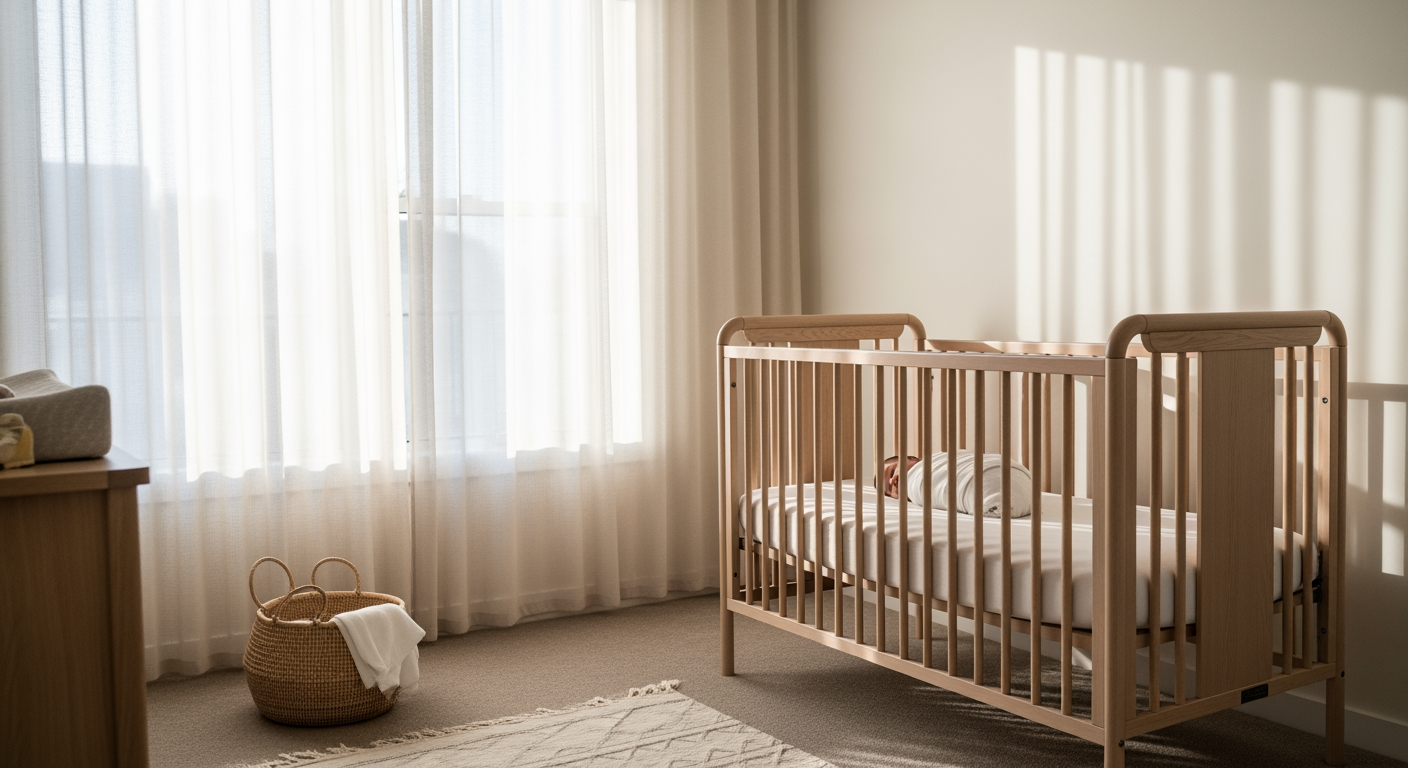
You put your baby down for a nap. You tiptoe out of the room, hopeful for a moment of rest. You finally sit down with a warm drink, and then you hear it. The baby is awake. You check the time. It has only been 30 minutes. This cycle can be incredibly frustrating. It feels like there is barely enough time to catch your breath, let alone get anything done.
If this sounds familiar, you are not alone. The 30-minute nap, often called a "catnap," is one of the most common sleep challenges parents face. This short nap length is not random. It is the exact length of one baby sleep cycle. Waking after one cycle is often a normal part of your baby's development. Their brain is still learning how to connect sleep cycles for longer, more restorative rest.
This article will guide you through this common issue. First, we will help you figure out if these short naps are truly a problem. Then, we will explore the main reasons why your baby wakes up early. Finally, you will get a clear, step-by-step plan with gentle solutions to help your baby nap longer. You can get more rest for both your baby and yourself.
First, Is a 30-Minute Nap *Really* a Problem?
Before you try to fix short naps, it is important to ask if they need fixing. In many cases, short naps are completely normal. Many parents worry that every nap must be long. This is a common myth. The truth is that nap needs change as a baby grows. For young infants, short and frequent naps are standard. Their sleep patterns are still very disorganized. Their internal clock, or circadian rhythm, is just starting to develop. This means their sleep can seem random and unpredictable.
Development plays a huge role. Most babies do not consistently connect sleep cycles for naps until they are about 5 to 6 months old. Before this age, waking after one 30-45 minute cycle is very common. It is a sign of a maturing sleep system, not a problem you created. Also, consider the time of day. The last nap of the day is often a short catnap. Its purpose is simply to help your baby make it to bedtime without getting overtired. Trying to force this nap to be long can sometimes backfire and lead to a later bedtime or other sleep issues. The goal is not always a long nap, but a happy and well-rested baby.
To figure out if short naps are an issue for your baby, look at the big picture. How is your baby's mood during their awake time? Are they generally happy and engaged, or are they fussy and hard to please? A baby's overall disposition is a much better indicator of their restfulness than the exact length of a single nap. Below is a simple checklist to help you decide.

When Short Naps Are Okay
You may not need to worry about short naps if your baby fits these descriptions. In these situations, your baby is likely getting the daytime rest they currently need. It is often best to wait and let their sleep patterns mature naturally.
- Your baby is under 5 months old. Their sleep is still maturing, and short naps are developmentally normal.
- Your baby wakes up happy and content. A happy wake-up usually means the nap was restorative enough for that moment.
- Your baby is feeding well and meeting milestones. This shows that short naps are not negatively impacting their growth or development.
- Your baby sleeps well at night. If night sleep is solid, daytime naps might be all your baby needs.
- It is only the last nap of the day. This catnap is meant to be a short bridge to bedtime.
When Short Naps Are a Problem
On the other hand, short naps can be a sign of an underlying issue that needs to be addressed. If catnapping leads to a chronically tired baby, it creates a difficult cycle. Overtiredness makes it harder for a baby to fall asleep and stay asleep, leading to more short naps. This can affect the whole family.
- Your baby always wakes up crying or fussy. This is a clear sign they are still tired and needed more sleep.
- Your baby is cranky and overtired all day. They may be difficult to soothe and seem generally unhappy between naps.
- The short naps are causing frequent night wakings. A lack of daytime sleep can disrupt nighttime sleep patterns.
- You are feeling trapped and exhausted. Your well-being matters. If constant short naps are affecting your mental health, it is a valid reason to seek a solution.
The 5 Core Reasons Your Baby Wakes Up at 30-45 Minutes
If you have decided that short naps are a problem, the next step is to understand why they are happening. It is rarely just one thing. Often, a few factors work together to cause early waking. By learning about these core reasons, you can start to pinpoint what might be affecting your baby's sleep. Think of yourself as a sleep detective, looking for clues. We will cover the five most common culprits behind the dreaded 30-minute nap.

Reason 1: The Sleep Cycle Transition
The most fundamental reason for short naps is the structure of a baby's sleep. Unlike adults, babies have very short sleep cycles, lasting about 30 to 50 minutes. At the end of each cycle, they enter a very light stage of sleep. They might stir, move around, or even open their eyes for a moment. This is a natural, brief awakening. The challenge is that they do not yet have the skill to fall back into another sleep cycle on their own. Instead of transitioning into the next phase of sleep, they wake up completely.
Think of it like a train ride with a quick stop. The first leg of the journey is 30 minutes long. When the train reaches the station (the end of the sleep cycle), your baby needs to know how to stay on for the next part of the trip. If they do not, they get off the train, and the nap is over. This ability to connect sleep cycles is a developmental skill. It matures as their brain grows, usually around 5 to 6 months of age. So, if your baby is younger than this, their short naps are largely due to biology. It is not something you are doing wrong.
Reason 2: The Wake Window Was Wrong
This is perhaps the most common and fixable reason for short naps. A "wake window" is the amount of time a baby can comfortably stay awake between sleeps. Getting this window right is crucial for good naps. There are two ways it can go wrong. The baby can be undertired or, more often, overtired. An undertired baby does not have enough sleep pressure to stay asleep for a long time. They might fall asleep easily but wake up after 30 minutes feeling refreshed and ready to play.
The bigger problem is overtiredness. Imagine a "sleep pressure" piggy bank. Your baby earns sleep pressure while they are awake. You want to put them down for a nap when the bank is full, but not overflowing. If you wait too long, the bank "breaks." Their body releases stress hormones like cortisol to cope with being tired. This rush of hormones acts like a shot of adrenaline. It makes it extremely difficult for a baby to fall asleep and to stay in a deep, restorative sleep. Recognizing the common signs of an overtired baby is the first step to breaking this frustrating cycle. An overtired baby might fight sleep, cry intensely, and then wake up after a short nap because their body is too wired to relax.
Reason 3: A Sleep Association is Missing
A sleep association is anything your baby needs to fall asleep. Common associations include rocking, feeding, holding, or a pacifier. These are not inherently bad. They are wonderful ways to soothe your baby. However, they can become a problem for naps if your baby cannot fall asleep without them. Think of the sleep association as a key needed to open the door to sleep. If your baby needs you to use that key to help them fall asleep at the start of the nap, they will need that same key when they stir between sleep cycles.
When they wake briefly at the 30-minute mark, they are in a light sleep state. They realize the thing that helped them fall asleep is now gone. You are no longer rocking them, or the bottle is no longer in their mouth. Since they have not learned how to get back to sleep on their own, they wake up fully and cry out for you to come back and provide that key again. The long-term solution is to help your baby learn the skill of falling asleep independently. This empowers them to resettle on their own during those brief awakenings between cycles.
Reason 4: Hunger is Calling
A hungry baby is not a sleepy baby. This is especially true for younger infants with tiny stomachs. They need to eat frequently, and a rumbling tummy can easily cut a nap short. Sometimes, a baby might be so tired that they fall asleep while feeding. They get just enough milk to take the edge off their hunger but do not get a full feeding. They then fall asleep, only to be woken up 30 minutes later by hunger pangs. This is a common pattern that can lead to a cycle of snacking and catnapping all day.
To prevent this, focus on offering full feedings throughout the day. Aim for a feeding schedule where your baby eats every 2.5 to 3.5 hours, depending on their age and needs. Try to separate feeding from sleeping, even by a few minutes. For example, you can offer a feeding when your baby wakes up from a nap instead of right before they go down for one. This ensures they are awake and alert enough to take a full, satisfying meal. This simple change can make a huge difference in nap length.
Reason 5: The Environment is Too Stimulating
Newborns can often sleep through anything. They can nap in a bright living room with the TV on. However, this changes quickly. Around 2 months of age, a baby's brain develops. They become much more aware of and sensitive to their surroundings. Light and sound become major signals to their brain. A sliver of light coming through the curtains or the sound of a dog barking can be enough to pull them out of a light sleep stage and end a nap prematurely.
At the 30-45 minute mark of a nap, when your baby is transitioning between sleep cycles, they are very vulnerable to these disturbances. If the room is not dark enough, the light can signal to their brain that it is time to wake up. If an unexpected noise occurs, it can startle them awake. Creating a consistent, boring, and optimized sleep environment is one of the most effective ways to encourage longer naps. It removes these outside variables and gives your baby the best possible chance to connect their sleep cycles without interruption.
Your Step-by-Step Plan to Lengthen Naps
Now that you know the common causes of short naps, it is time for action. This plan is designed as a series of experiments. The key is to make one change at a time and give it a few days to work. Trying to change everything at once can be overwhelming for both you and your baby. It also makes it impossible to know what is actually working. Follow these steps in order to build a strong foundation for longer, more restorative naps. Using a clear short nap troubleshooting checklist can make this process much easier to manage. Remember to be patient and consistent.

Step 1: Optimize the Sleep Environment (The Quickest Fix)
This is the fastest and easiest change to make, and it often has a big impact. Your goal is to create a sleep space that signals 'sleep time' and minimizes distractions.
- Darkness: Make the room as dark as a cave, even for daytime naps. Use blackout curtains or even temporary solutions like cardboard on the windows. Even a small amount of light can disrupt a baby's sleep cycle.
- White Noise: Use a continuous white noise machine placed a safe distance from the crib. This helps block out sudden household noises that can startle your baby awake between cycles. The sound should be no louder than a soft shower.
- Temperature: Keep the room cool and comfortable. The ideal temperature for sleep is between 68-72°F (20-22°C). A baby who is too hot or too cold will not sleep well. Dress them in appropriate layers.
Step 2: Dial in Wake Windows
Once the environment is set, focus on timing. As we discussed, an overtired or undertired baby will not nap well. Use the table below as a starting guide for age-appropriate wake windows. Remember, these are averages. Your baby might need slightly more or less awake time. Track your baby's sleep and sleepy cues for a few days. If naps are consistently short, try adjusting the wake window by 15 minutes. For example, if your 5-month-old is taking short naps with a 2-hour wake window, try putting them down after 1 hour and 45 minutes.
| Age | Appropriate Wake Window | Number of Naps |
|---|---|---|
| 0–3 Months | 60–90 minutes | 4-5+ |
| 4–6 Months | 1.5–2.5 hours | 3-4 |
| 6–9 Months | 2.5–3.5 hours | 2-3 |
| 9-12 Months | 3-4 hours | 2 |
Step 3: Introduce a Consistent Pre-Nap Routine
Babies thrive on routine. A predictable sequence of events helps them understand what is coming next. A pre-nap routine does not need to be long or complicated. A simple, 5-minute routine is perfect. This powerful cue signals to your baby's brain that it is time to wind down and prepare for sleep. The key is to do the same short series of activities in the same order before every nap. For example, your routine could be: change the diaper, close the curtains, put on the sleep sack, turn on the white noise, read one short book, and then a quick cuddle before placing them in the crib.
Step 4: Practice Independent Sleep Initiation
This is the foundation for connecting sleep cycles. If a baby can put themselves to sleep at the beginning of the nap, they are much more likely to be able to put themselves back to sleep between cycles. The goal is to place your baby in their crib when they are calm but still awake. This is a skill that takes time and patience to develop. Start small. If you currently rock your baby to a deep sleep, try rocking them only until they are drowsy. If you feed them to sleep, try moving the feeding to the beginning of the nap routine. This creates separation between eating and sleeping. Every small step toward independent sleep is a victory.
Step 5: Give Your Baby a Chance to Resettle
When you hear your baby stir or fuss at the 30-45 minute mark, your instinct might be to rush in immediately. Try to pause. Wait for 5 to 10 minutes before going to them, as long as they are not crying hysterically. Many babies are noisy sleepers. They might grunt, groan, or even cry out for a minute before settling back down on their own. By rushing in, you might be interrupting their process of learning to connect sleep cycles. Giving them a little space provides the opportunity to practice this crucial skill. If you do decide to intervene, there are gentle, safe resettling techniques you can use to help them without fully taking over.
Next Steps: What to Try When You've Done Everything
Sometimes you can do everything right—the room is dark, the wake window is perfect, the routine is solid—and your baby still takes short naps. This can be discouraging, but do not lose hope. There are a few more advanced strategies you can try. These methods are typically better suited for babies who are a bit older and have a solid foundation of independent sleep. It is also important to remember that sometimes, the best strategy is to manage expectations and accept your baby's unique sleep patterns.
Consider the "Crib Hour" for Babies 5+ Months
The "crib hour" is a nap-training technique for babies who can already fall asleep on their own but struggle to connect cycles. The rule is simple: the nap opportunity lasts for one full hour from the time you put your baby down. If they wake up after 30 minutes, you leave them in their crib for the remaining 30 minutes, as long as they are safe and not overly distressed. This is not a "cry it out" method for falling asleep. It is a way to provide a quiet, boring, and low-stimulation environment for them to practice falling back to sleep.
The idea is that they learn that nap time is not over just because they woke up briefly. This method should only be used for babies over 5-6 months old who can fall asleep independently at the start of the nap. It is not suitable for all babies or all families. If your baby becomes hysterical, it is best to end the nap and try again later. But for some, it can be the final push they need to start connecting those cycles.
Try an "Assisted Nap" to Break an Overtired Cycle
If your baby has had several days of short naps, they are likely stuck in an overtired cycle. Their body is so full of stress hormones that it is nearly impossible for them to get the restorative sleep they need. In this situation, it is okay to 'save' a nap. This means getting them to sleep for a long stretch by any means necessary. You could hold them for the entire nap, wear them in a baby carrier, or go for a long walk with the stroller. The goal is to ensure they get at least one long, restorative nap (over an hour) to reset their system.
Do not worry that this will ruin all your progress. One or two assisted naps will not create a permanent bad habit. Think of it as a reset button. It helps break the cycle of cortisol buildup and gives your baby a clean slate. A well-rested baby is much more likely to take a good nap the next time. Once the overtiredness is resolved, you can go back to practicing independent sleep in the crib.
Know When to Adjust Expectations
Finally, it is important to acknowledge that some babies are just naturally shorter nappers. We all know adults who need eight hours of sleep and others who thrive on six. Babies are no different. They have their own unique sleep needs. If you have tried everything and your baby is still taking 30-45 minute naps, take a step back and look at the whole picture. Is your baby happy and energetic during their wake windows? Are they growing well and meeting their developmental milestones? Are they sleeping reasonably well at night?
If the answer to these questions is yes, you might simply have a baby with lower sleep needs. In this case, fighting for longer naps might cause more stress than it is worth. It may be more helpful to adjust your own expectations. Accepting your baby's natural rhythm can be freeing. You can plan your day around more frequent but shorter breaks. As long as your baby is healthy and happy, you are not failing if their naps are short.
Your Path to Longer Naps Starts Now
Dealing with short naps can be one of the most challenging parts of early parenthood. Remember that you are not alone in this struggle. This is a very common phase that most babies go through. The key is to be a patient sleep detective. Start by creating a dark, quiet sleep space. Then, focus on finding your baby's ideal wake window to avoid them being overtired. A consistent, simple pre-nap routine will signal that it is time to sleep.

Working toward independent sleep is the ultimate goal, as this skill allows your baby to connect sleep cycles on their own. Be patient and consistent with your approach. It can take several days or even a few weeks to see lasting change. Celebrate small victories along the way. Every slightly longer nap is a step in the right direction. You have the tools to guide your baby toward more restful sleep. Trust your instincts, be kind to yourself, and know that this phase will not last forever.