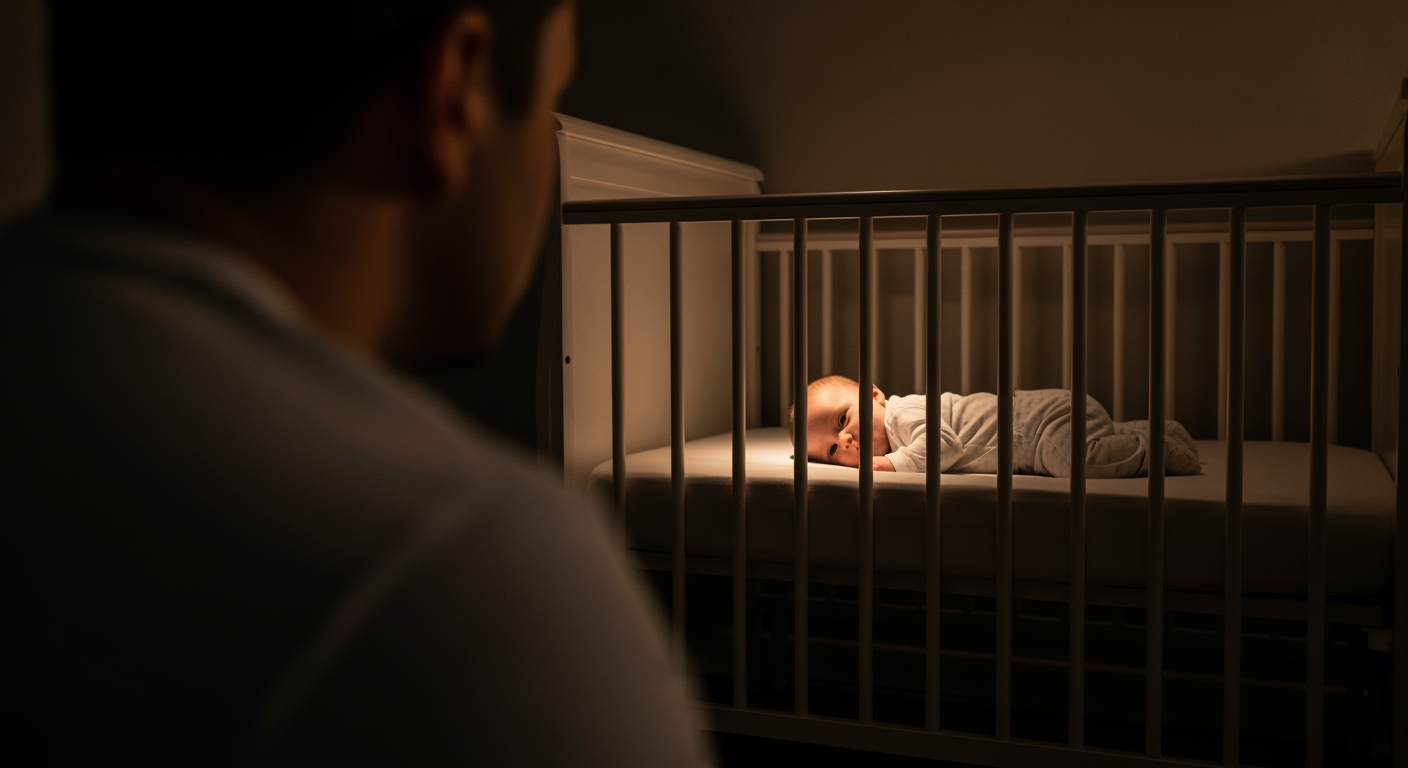
Are the 2 AM wake-up calls your new normal? If you are reading this, you are likely exhausted. You might feel confused, frustrated, and even a little defeated. You love your baby, but you desperately need more sleep. Please know you are not alone, and you are not doing anything wrong. Frequent night wakings are a very common part of infancy, but that does not mean they are unsolvable.
The key to getting longer stretches of sleep is understanding why your baby wakes up. The reasons change quickly as your baby grows and develops. A newborn wakes for very different reasons than a 9-month-old. Trying to apply the wrong solution to the right problem will only lead to more frustration for both of you.
This guide will help you become a sleep detective. We will give you clear, evidence-based answers. You will learn what is normal for your baby’s age and what might be causing the wakings. We will walk you through an age-by-age breakdown of common problems and gentle solutions. You will also get a simple checklist to help you pinpoint the issue tonight.
First, What Does "Sleeping Through the Night" Actually Mean?
The phrase "sleeping through the night" can create a lot of pressure. Many parents believe their baby is failing if they do not sleep for 12 straight hours. This expectation is often unrealistic. The definition of sleeping through the night changes as your baby gets older. It is a developmental milestone, just like rolling over or crawling. And like all milestones, it happens at different times for every child. For a three-month-old, a single five-hour stretch of sleep is a huge success. For an eight-month-old, it might mean ten hours without needing you. It is vital to adjust your expectations based on your baby's age and development.

Research shows that night wakings are very normal. One study found that at six months old, nearly 38% of babies were not sleeping for a solid six-hour stretch. At 12 months old, 28% still were not. These numbers show that you and your baby are not behind. Most babies are developmentally capable of longer sleep stretches around five to six months of age. At this point, they can often go longer without a feeding. However, many healthy, thriving babies still need a night feed until they are nine months old or even older. There is no magic age when all babies suddenly sleep through the night. Pushing them before they are ready can backfire.
Understanding baby sleep cycles can also help. Think of your baby's sleep like a small rollercoaster. They move from deep sleep (the bottom of the hill) to light sleep (the top of the hill). This cycle lasts about 45-60 minutes. At the top of the hill, in light sleep, it is very easy for them to wake up. Adults do this too, but we usually roll over and go back to sleep without even remembering. Babies need to learn this skill. If they do not know how to get back to sleep on their own, they will cry for your help every time they reach the top of that hill. The goal is to teach them how to ride into the next sleep cycle all by themselves.
The table below offers a realistic look at sleep expectations. Use it as a guide, not a strict rule. It can help you see what is typical for your baby's current stage.
| Age | "Sleeping Through" Goal | Total Sleep in 24 Hrs |
|---|---|---|
| 0-3 Months | 3-5 hour stretches | 14-17 hours |
| 4-6 Months | 6-8 hour stretches | 12-16 hours |
| 7-12 Months | 10-12 hour stretches | 11-14 hours |
| 12-18 Months | 10-12 hour stretches | 11-14 hours |
Remembering these realistic goals can lower your stress. Your baby is not broken. They are simply learning a complex new skill. Your role is to provide a supportive and consistent environment that helps them learn. With patience and the right approach, you can guide them toward longer, more restful nights.
The 5 Universal Reasons Your Baby Wakes Up
While every baby is different, most night wakings boil down to a few core reasons. Before we dive into the age-specific issues, it is helpful to understand these universal drivers. Once you can spot them, you will be much better equipped to find the right solution. These five factors are often interconnected. Sometimes, more than one is at play. Learning to identify them is the first step toward solving your baby's sleep puzzle.

Developmental Leaps (Sleep Regressions)
If your baby was sleeping well and suddenly starts waking up frequently, you may be in a sleep regression. These are temporary but frustrating periods when a baby's sleep patterns get disrupted. They are not setbacks. In fact, they are signs of incredible progress in your baby's brain and body. These regressions are closely tied to major developmental milestones. Common ones happen around 4, 8, 12, and 18 months. For example, the four-month regression is caused by a permanent change in how your baby's brain organizes sleep. They start sleeping more like adults, with more defined light and deep sleep cycles. The eight-month regression often coincides with learning to crawl or pull to stand. Your baby might wake up and want to practice their new skill in the crib. These phases usually last for two to four weeks. The key is to stay consistent with your routines and avoid creating new habits that you will have to undo later.
Hunger & Growth Spurts
For young babies, hunger is a primary reason for waking. Newborns have tiny stomachs and need to eat every two to three hours, day and night. As they get older, they can go for longer stretches. However, babies go through frequent growth spurts. During these times, they may be genuinely hungrier and need to eat more often, even at night. This can feel like a step backward, but it is temporary. The challenge is learning to tell the difference between a real hunger wake and a habit wake. A truly hungry baby will usually wake up fully, be eager to eat, and take a full feeding. A baby waking out of habit may only drink a small amount before dozing off again. They are seeking comfort more than calories. Understanding the typical night weaning timeline by age can help you decide if your baby is developmentally ready to drop a feeding.
Sleep Associations
A sleep association is anything your baby needs to fall asleep. Think of it as their special 'key' to unlock sleep. For many babies, that key is being rocked, fed, held, or using a pacifier. These are wonderful tools for calming a fussy baby. However, if your baby relies on you to provide this key at bedtime, they will need that same key every time they wake up at night. They have not yet learned how to fall back asleep on their own. This is perhaps the most common reason for frequent night wakings in babies older than four months. The solution is not to remove all comfort. Instead, the goal is to help your baby find a key they can use themselves. This process is about helping your child teach your baby to self-soothe gently, like finding their hands or getting comfortable in their crib, so they do not need to call for you every 45 minutes.
Environmental & Physical Discomfort
Sometimes the cause of night waking is simple discomfort. A baby who is too hot, too cold, or startled by a loud noise will have trouble staying asleep. A wet or dirty diaper can also be enough to wake them. Teething pain is another common culprit. As new teeth push through the gums, it can cause significant discomfort that gets worse at night when there are fewer distractions. The American Academy of Pediatrics (AAP) recommends a safe and comfortable sleep environment. This means a bare crib with no loose blankets, pillows, or toys. The room should be kept at a comfortable temperature, generally between 68-72°F (20-22°C). A dark room and a white noise machine can also help block out disruptions and promote better sleep. Always check for these simple fixes first.
An Overtired or Undertired Schedule
Your baby's daily schedule has a huge impact on their night sleep. Imagine a balloon that you fill with 'sleepiness' all day. Every hour your baby is awake, you pump more air into the balloon. This is called sleep pressure. If you keep your baby up for too long, the balloon gets too full and 'pops.' This leads to an overtired baby. An overtired baby's body releases stress hormones like cortisol, which makes it much harder for them to fall asleep and stay asleep. On the other hand, if your baby naps too much or too late in the day, the sleep pressure balloon is not full enough by bedtime. They are undertired and simply not ready for a long night of sleep. Finding the right balance is crucial. Following a flexible, age-based infant routine can prevent both overtiredness and undertiredness, setting the stage for a successful night.
Your Age-by-Age Troubleshooting Guide to Night Wakings
Now that you understand the universal reasons for waking, let's connect them to your baby's specific developmental stage. The problems and solutions for a newborn are vastly different from those for a toddler. Finding your baby's age group below will give you targeted, actionable advice that you can use right away. This approach helps you focus on what is most likely affecting your baby now, making your efforts more effective and less stressful.
The Newborn (0-3 Months): Survival & Circadian Rhythms
In this early stage, sleep is disorganized and unpredictable. Your only job is to respond to your baby's needs and survive. Night wakings are not just normal; they are necessary.
- Common Reasons: Hunger is the main driver. Newborns have tiny stomachs and must eat every 2-3 hours. They also struggle with day/night confusion because their internal clock (circadian rhythm) is not yet developed. Finally, newborns have very active sleep. They may grunt, squirm, and even cry out in their sleep without actually being awake.
- Gentle Solutions: Always respond to your baby's hunger cues. To help set their body clock, expose them to natural daylight and household noises during the day. At night, keep feedings dark, quiet, and boring. When you hear them making noise at night, pause for a minute. See if they settle back down on their own before you rush in. You might be surprised to find they were not truly awake.
The 4-6 Month Old: The Great Sleep Shift
This age is often marked by the infamous four-month sleep regression. Sleep patterns change permanently, and this transition can be rocky. Your baby is becoming more aware of the world.
- Common Reasons: The four-month regression is the biggest culprit. Your baby's sleep cycles now shift to a more adult-like pattern, with more light sleep stages. This means more opportunities to wake up. They may also be learning to roll, which can be disruptive if they get 'stuck' on their tummy. Their schedule is also changing as they begin to transition from four naps down to three.
- Gentle Solutions: Consistency is your best friend. Focus on a solid, predictable bedtime routine to signal that sleep is coming. This is the perfect age to start practicing putting your baby down 'drowsy but awake.' It gives them the chance to learn how to fall asleep without you. Ensure their sleep space is safe. Since they may be rolling, the crib must be completely empty, following AAP safe sleep guidelines.
The 7-12 Month Old: Mobility & Separation Anxiety
Your baby is on the move! This exciting period of new motor skills and emotional development can wreak havoc on sleep. They understand object permanence, which means they know you exist even when you are not there.
- Common Reasons: Separation anxiety often peaks during this time. Your baby may cry when you leave the room. They are also busy learning to crawl, pull to a standing position, and babble. They may wake at night and want to practice these skills. The nap transition from three to two naps can also cause overtiredness if not managed well.
- Gentle Solutions: Offer extra cuddles and reassurance during the day and at bedtime. However, try not to start new habits like rocking to sleep. During awake time, give them plenty of floor time to practice their new motor skills. A tired body leads to a tired mind. Make sure their two-nap schedule is age-appropriate to prevent them from becoming overtired by bedtime.
The Toddler (12-18+ Months): Independence & Testing Boundaries
Welcome to toddlerhood, where your little one's desire for independence clashes with their need for sleep. Sleep issues at this age are often more behavioral than developmental.
- Common Reasons: Regressions around 12 and 18 months are linked to huge cognitive leaps like walking and talking. The tricky transition from two naps to one can also cause major overtiredness. Toddlers are also famous for testing boundaries. They may protest bedtime or call for you repeatedly at night just to see what will happen.
- Gentle Solutions: The key here is to be firm, calm, and very consistent with your rules around sleep. Use a simple, gentle sleep training method if needed, like the 'pick up, put down' or 'chair method,' to offer reassurance without giving in to demands. Double-check that their sleep environment is still safe for a child who is now much more mobile and curious.
Your 5-Step Pre-Intervention Checklist
Before you consider any major changes or sleep training, run through this simple checklist. Many sleep problems can be solved by addressing one of these five areas. Think of this as your diagnostic tool. By ruling out these common issues, you can get a much clearer picture of what is truly causing your baby's night wakings. You might find that a small adjustment is all you need to get back on track.

- Check the Environment. A baby's sleep space should be a boring cave: dark, cool, and quiet. Is the room truly dark? Even a small amount of light from a hallway or streetlamp can disrupt melatonin production, the hormone that regulates sleep. Use blackout curtains. Is the room at a comfortable temperature, typically between 68-72°F (20-22°C)? Overheating is a SIDS risk and can easily wake a baby. A white noise machine can be a powerful tool to block out sudden household noises. Finally, follow AAP safe sleep guidelines. The crib should be bare, containing only a firm mattress with a fitted sheet. No blankets, pillows, bumpers, or toys.
- Review the Schedule. The timing of sleep is everything. Look at your baby's day. Did they get the right amount of daytime sleep for their age? Too much nap time can reduce their 'sleep pressure' for the night. Too little nap time leads to an overtired baby who fights sleep. Pay close attention to their last wake window—the time between their last nap and bedtime. If this window is too short, they will not be tired enough. If it is too long, they will be overtired and wired. Even a 15-minute difference can have a huge impact. Learn to balance watching the clock with observing your baby's unique sleepy cues.
- Assess for Discomfort. Pain or illness will ruin anyone's sleep, especially a baby's. Could teething be the issue? Look for signs like excessive drooling, fussiness during the day, and a desire to gnaw on everything. Talk to your pediatrician about safe pain relief options if needed. Rule out illness by checking for a fever, a runny nose, or a cough. Also consider less obvious issues like gas pain or reflux. If your baby seems unusually fussy or uncomfortable, it is always a good idea to check in with your doctor to rule out any underlying medical issues before focusing on behavioral sleep solutions.
- Analyze the Bedtime Routine. A good bedtime routine is a powerful signal to your baby's brain that it is time to wind down and prepare for sleep. Is your routine consistent? Do you do the same 3-4 calming activities in the same order every single night? A predictable routine might include a warm bath, putting on pajamas, reading a short book, and singing a lullaby, all in a dimly lit room. The whole process should be calm and last about 20-30 minutes. A chaotic or rushed routine will not give your baby the chance to transition peacefully from the business of the day to the restfulness of night.
- Evaluate the Sleep Association. This is often the root cause of frequent wakings. Ask yourself one simple question: How did my baby fall asleep at bedtime? If the answer involves you—rocking, feeding, holding, bouncing—then you have found a strong sleep association. Your baby depends on that action to fall asleep. When they naturally wake between sleep cycles during the night, they are unable to get back to sleep without your help. They need you to come and 'do the thing' that puts them to sleep. Identifying this is the key. Changing this one factor is often the most direct path to helping your baby connect their sleep cycles and sleep for longer stretches.
Your Path to Better Nights Ahead
Navigating your baby's sleep can feel like a long and winding journey. Remember that night wakings are a normal part of development, not a reflection of your parenting. The most important takeaway is that the solution to your baby's sleep challenges lies in understanding their unique developmental stage. What works for a four-month-old will not work for a fourteen-month-old.

Your next step is to take action, but do so gently and with patience. Start by using the pre-intervention checklist. You may find that a simple fix, like adjusting the last wake window or making the room darker, makes a world of difference. If the issue is a sleep association, focus on giving your baby the opportunity to learn the skill of falling asleep independently. Choose one strategy and stick with it. Consistency is far more important than perfection.
Be kind to yourself through this process. You are tired, and this is hard work. Celebrate small victories, whether it is one less waking or a few minutes of self-soothing. Progress is not always linear. There will be good nights and bad nights. But with a consistent, loving, and age-appropriate approach, you can guide your baby toward more restful sleep. You are giving them a valuable life skill, and in the process, you will get the rest you need and deserve. Better nights are ahead.