
Parents of infants often share a common hope. They believe a full tummy will lead to a full night of sleep. This hope is especially strong when a baby is ready to start solid foods. Many parents see this milestone as the solution to frequent night wakings. You may be wondering if a spoonful of purée is the key to finally getting more rest.
The information online is confusing. Some sources claim solids are a sleep miracle. Others say this is a dangerous myth. The truth is more complex. Starting solids is a major developmental step for your baby. It can affect sleep, but not always in the way you expect. It is not a magic bullet for sleep problems.
This guide provides a clear path. We will look at the science behind food and infant sleep. We will explore how introducing solids can sometimes backfire. Most importantly, we will give you a step-by-step plan to introduce foods in a way that supports, rather than disrupts, your baby's sleep. This will help you make the best choice for your family.
The Big Question: Does Science Say Solids Improve Sleep?
When you are tired, you look for clear answers. The question of whether solid food improves baby sleep has been studied. But the results are not as straightforward as many parents would like. A well-known study from 2018 does provide some interesting data. This study, published in JAMA Pediatrics, looked at the early introduction of solids. It found that babies who started solids earlier slept a little longer. At six months old, this group slept about 16.6 minutes more per night. They also woke up slightly less often.

While 17 extra minutes of sleep might sound good, it is important to understand the context. The study’s main purpose was to research food allergies, not sleep. The sleep data was a secondary finding. For an exhausted parent, 17 minutes does not usually translate to a full night of uninterrupted rest. It shows a small effect, not a major solution. Many other studies and health organizations, including the American Academy of Pediatrics (AAP), report no significant link between starting solids and sleeping through the night. They find that sleep is a developmental skill. It depends more on a baby's age, temperament, and sleep habits than on their diet.
The AAP recommends starting solids around six months of age. This recommendation is based on developmental readiness, not as a strategy to improve sleep. Your baby needs to show specific signs they are ready. These include good head control and an interest in what you are eating. The idea is to add complementary foods when the baby is physically prepared to handle them.
To understand why solids are not a simple fix, think about calorie density. Your baby’s stomach is like a small gas tank. Breast milk and formula are like premium, high-energy fuel. They pack a lot of calories and nutrients into a small volume. Many first foods, like plain vegetable purées, are less dense. They are more like regular fuel. They fill the tank but provide less energy per ounce. If your baby fills up on lower-energy food, they may get hungry again sooner. This is a key reason why starting solids does not automatically lead to longer sleep.
4 Ways Starting Solids Can Accidentally Worsen Sleep
Many parents are surprised when starting solids leads to more night wakings, not fewer. Understanding the common pitfalls can help you avoid them. These issues are usually temporary and manageable. By anticipating them, you can make the transition to solids a much smoother process for both you and your baby.

Problem #1: The Tummy is Overwhelmed
For the first few months of life, your baby's digestive system has had one job: digesting liquid. Breast milk or formula is easy to break down. Introducing solid food is a big change. Think of your baby's gut as a kitchen that has only ever made smoothies. Suddenly, you are asking it to prepare a complex new dish. The kitchen needs time to get the right tools (enzymes) and rhythm to handle these new ingredients. During this adjustment period, things can get messy.
This adjustment can lead to digestive discomfort. You might notice your baby is more gassy. They could become constipated or have more frequent, differently textured stools. This discomfort is real. It can cause a happy baby to become fussy and a good sleeper to wake up crying at night. This is a primary reason why experts recommend introducing new foods in the morning. It gives your baby's system the whole day to process the food. Any potential upset is more likely to happen during the day, not in the middle of the night.
Problem #2: Low-Calorie Foods are Replacing High-Calorie Milk
Until their first birthday, an infant's primary source of nutrition should be breast milk or formula. These liquids are perfectly designed for a growing baby. They are packed with calories, fat, protein, and vitamins. Ounce for ounce, they are far more calorie-dense than most single-ingredient purées. For example, four ounces of formula has about 80 calories. Four ounces of carrot purée has only about 40 calories.
A common mistake is letting solids displace milk feeds. A baby might love the new taste and texture of sweet potatoes. They might eat a large portion and seem full. But if this causes them to drink less milk at their next feed, their total daily calorie intake could drop. This calorie deficit does not show up right away. It shows up at 2 a.m., when the baby wakes up genuinely hungry. This is a frequent cause when a baby is not sleeping through the night after starting solids. The solution is to offer milk first, ensuring they get their essential calories before solids are introduced as a supplement.
Problem #3: The Timing is Off
Digesting solid food is harder work for a baby's body than digesting milk. It requires more effort and time. Giving your baby a large meal of solids right before bedtime can be counterproductive. Their body will be busy working to digest the food when it should be settling into a restful state. This can lead to discomfort, gas, and a restless night.
A good rule of thumb is to create a buffer between solid food and sleep. The ideal schedule involves offering the milk feed first. Then, wait about 30 to 90 minutes before offering solids. This ensures the baby is not too hungry to enjoy the solids but has prioritized their main nutritional source. It also avoids sending them to bed with a very full stomach that's just starting a big digestive task. This approach separates the goal of calorie intake from the goal of sleep, which is helpful. As your baby gets older and solids become a bigger part of their diet, you might reconsider your schedule, but this separation is key in the beginning. It also helps clarify whether night wakings are due to hunger or habit, which is important when considering a night weaning timeline.
Problem #4: You're Mistaking a Sleep Regression for a Hunger Problem
The timing of introducing solids often coincides with major developmental milestones. Babies are typically ready for solids between four and six months of age. This exact window is also famous for a major sleep regression. A sleep regression is a period when a baby who was sleeping well suddenly starts waking frequently at night or taking short naps.
These regressions are not caused by hunger. They are caused by brain development. The sleep regression meaning is tied to new skills. Your baby’s sleep cycles are maturing to be more like an adult's. They are also learning new physical skills, like rolling over. It is very common for a baby to wake up in the night and start practicing their new skill. Because this happens around the same time as starting solids, it is easy for parents to mistakenly blame the food. They might think the baby is waking from hunger and offer more solids, which can compound the digestive issues we have already discussed. It is crucial to consider if development, not diet, is the real cause of the sleep disruption.
The Smart Starter’s Guide: A 5-Step Plan for Success
Introducing solids does not have to disrupt sleep. With a thoughtful approach, you can make it a positive experience that supports your baby’s overall health and well-being. This five-step plan provides a clear framework to follow. It helps you introduce new foods while minimizing the risk of sleep setbacks.
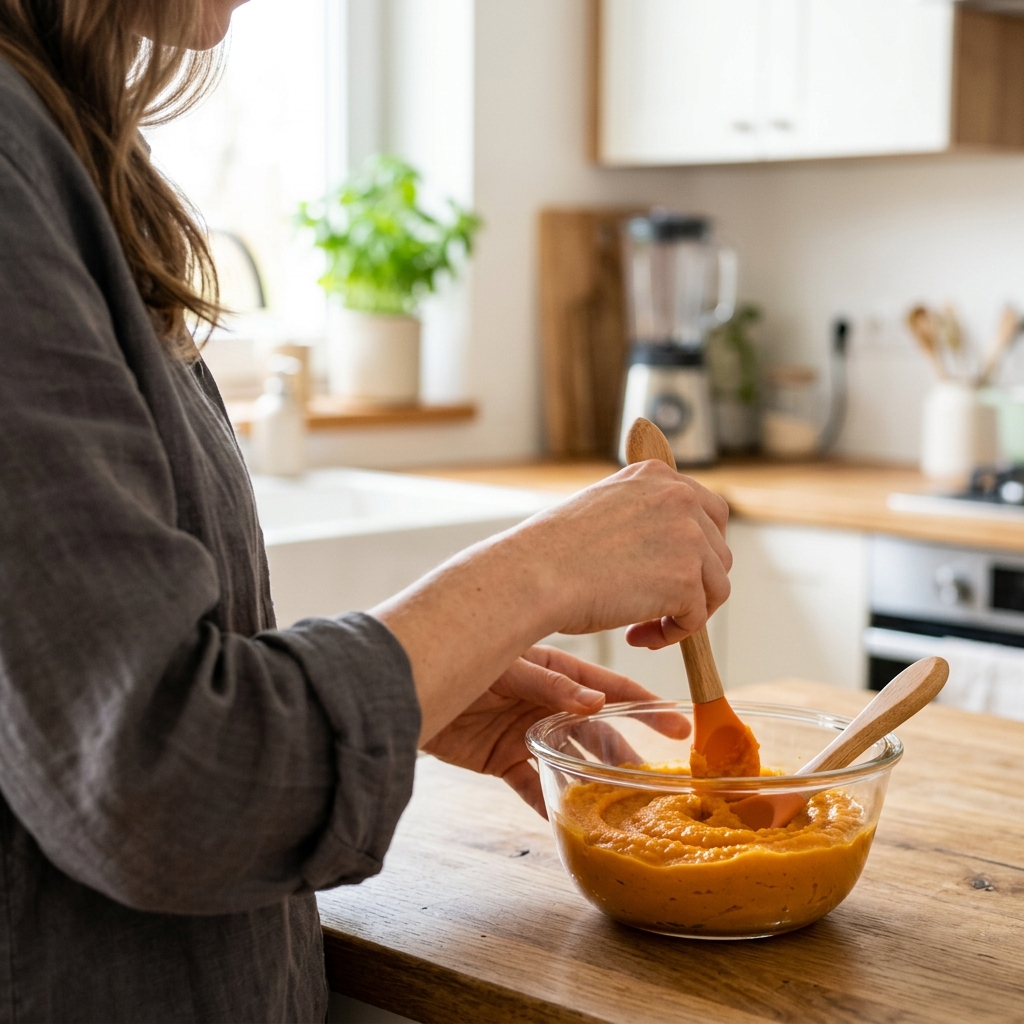
- Wait for the Right Signs (Not Just the Calendar)
Age is a guideline, not a rule. The American Academy of Pediatrics emphasizes developmental readiness. Before you offer the first spoonful, look for these key signs. Your baby should have good, steady head control. They should be able to sit up with minimal support. This ensures they are in a safe position for eating. Watch for their interest. Do they follow your food with their eyes or try to grab your fork? This shows curiosity. Finally, check for the tongue-thrust reflex. This is an infant reflex that pushes things out of the mouth. When this reflex diminishes, your baby can move food to the back of their mouth to swallow. Starting before they are ready can lead to frustration and a poor feeding experience.
- Master the Feed-Wait-Feed Timing
Remember that milk is the main event. Solids are the opening act. To prevent a drop in calorie intake, always offer breast milk or formula first. After the milk feed, wait about 30 to 90 minutes. Then offer a small amount of solids. This timing is strategic. The baby is not starving, so they are not frustrated. But they have had some time to digest their milk and have room for a new experience. A sample morning might look like this: 7:00 AM milk feed, followed by playtime. Then, around 8:00 AM, offer a solids breakfast. The next milk feed might be at 11:00 AM. This rhythm keeps milk as the priority while fitting in solids as a fun, complementary activity.
- Prioritize Nutrient-Dense Foods
Not all first foods are created equal. While the goal is exploration, you can also be strategic. Focus on foods that provide key nutrients your baby needs around six months. Iron is especially important. A baby's natural iron stores begin to deplete around this age. Iron deficiency itself has been linked to restless sleep and night wakings. Therefore, offering iron-rich foods can be beneficial. Good choices include iron-fortified baby cereals (like oatmeal) or puréed meats. Healthy fats are also crucial for brain development. Avocado and full-fat yogurt are excellent, nutrient-dense options. While single-ingredient vegetable and fruit purées are great, make sure to balance them with these more substantial foods to fuel your baby properly.
- Introduce New Foods in the Morning
This is a simple but powerful strategy. When you introduce a new food, offer it early in the day. This serves two purposes. First, it allows you to monitor for any signs of an allergic reaction during waking hours. These can include hives, rash, vomiting, or breathing difficulties. You want to be awake and alert to notice these signs and seek medical help if needed. Second, it helps you manage digestive issues. If a new food like broccoli causes gas and fussiness, it is much easier to handle at 3:00 PM than at 3:00 AM. Giving the baby's system all day to adjust makes it less likely that digestive discomfort will ruin a night's sleep.
- Hydrate, Hydrate, Hydrate
Adding solids, especially fiber-rich ones, changes the composition of your baby's stool. Constipation is a common side effect. Hard stools are uncomfortable and can be painful to pass, leading to fussiness and night wakings. One of the best ways to prevent this is with hydration. When you start solids, it is a good time to introduce a small amount of water. Offer just a few sips of water in an open cup or sippy cup with their solid meals. This is not to replace milk but to help their digestive system process the new solid food more smoothly. This small step can make a big difference in keeping your baby comfortable.
What This Means For Your Baby's Sleep
Introducing solids is a significant milestone in your baby's first year. It is a journey of new tastes, textures, and skills. However, it is important to see it for what it is: a step in nutritional and motor skill development, not a sleep training tool. While a small number of babies may experience slightly longer sleep, it is not a guaranteed outcome. The belief that a full stomach of solids will solve all sleep problems is largely a myth.

If your baby's sleep worsens after starting solids, use the framework in this guide to troubleshoot. Is their tummy overwhelmed? Are they taking in fewer calories overall? Is it just a developmental sleep regression? By approaching the situation with curiosity, you can often find the root cause and make small adjustments that help. Focus on a careful, gradual introduction of nutrient-dense foods, and always prioritize milk or formula as their main source of nutrition.
If sleep problems persist or become significantly worse, the issue is likely not the food itself. It may be related to sleep associations, scheduling, or other developmental leaps that need to be addressed separately. Most importantly, always consult with your pediatrician before making major changes to your baby’s diet. They can provide personalized advice, especially if your baby has issues with reflux, allergies, or poor weight gain.