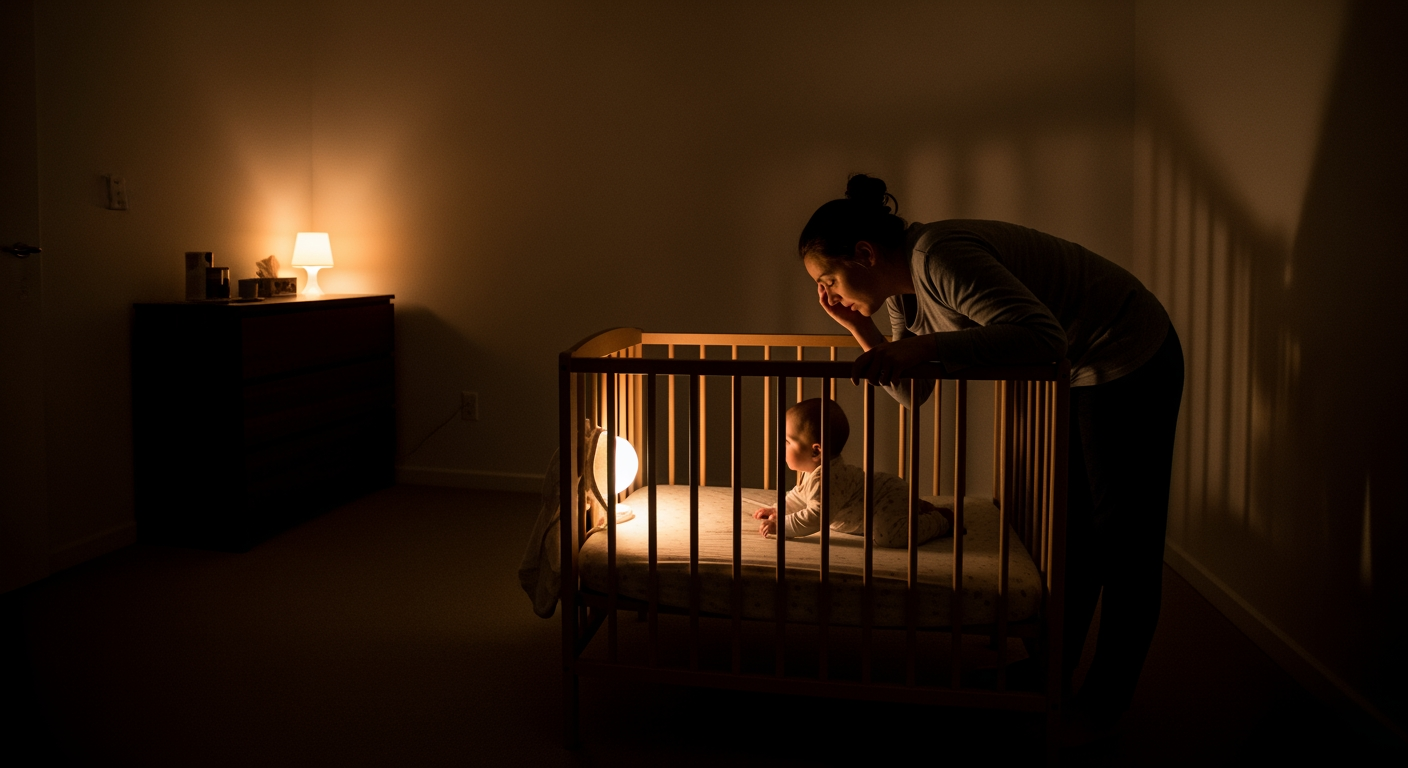
Just when you thought you had it figured out, it happens. Your baby, who was starting to sleep for longer stretches, is suddenly waking up. A lot. You feel exhausted, confused, and desperate for answers. If your baby is around four months old, you are likely facing the infamous 4-month sleep regression. It feels like a huge step backward, but it is actually a sign of major brain development.
This is not a true “regression” in skills. It is a permanent and positive change in your baby’s biology. Their sleep patterns are maturing from a simple newborn model to a more complex, adult-like system. This transition can be rocky, leading to frequent night wakings and short naps. The good news is that you are not powerless. While the change is permanent, the disruption does not have to be.
This guide will give you what you need most right now: a clear plan. We will walk you through this phase night by night. You will learn how to survive the first few nights and then gently guide your baby toward better, more independent sleep. You can get through this, and it can be a matter of days, not weeks.
First, Is It Really the 4-Month Regression? The Telltale Signs
Before you start a new plan, you need to be sure you are dealing with the 4-month sleep regression. This phase typically starts between three and five months of age. It marks a fundamental shift in your baby’s sleep architecture. A newborn's sleep is simple, with just two stages. Around four months, their brain matures to incorporate four distinct sleep stages, just like adults. This includes cycles of light sleep and deep sleep.

Think of it this way: your baby's sleep was like a basic on/off switch. Now, their brain is upgrading to a complex system with multiple settings. They wake up between each cycle because they have not learned how to transition smoothly from one stage to the next. A single sleep cycle for a four-month-old is about 45-60 minutes long. This is why you might see them wake up almost on the dot every hour. They complete a cycle, enter a light sleep phase, and become fully awake instead of drifting into the next cycle. The goal is to teach them how to connect these cycles on their own. Below are the most common signs that your baby has entered this developmental leap.
- Sudden Increase in Night Wakings: This is the hallmark sign. A baby who was sleeping for 5, 6, or even more hours at a time suddenly starts waking every 1-2 hours. These wakings happen because the baby is surfacing from a sleep cycle and doesn't know how to get back to sleep without help.
- The "45-Minute Intruder": Daytime naps that were once long and restorative are now cut short. Many parents report their baby wakes up after just 30-45 minutes. This is the length of one sleep cycle. Just like at night, the baby wakes up and cannot link their sleep to the next cycle.
- Bedtime Battles: Your peaceful bedtime routine might turn into a struggle. Your baby may resist falling asleep, cry more, or take much longer to finally drift off. This is often a sign of being overtired from poor naps and fragmented night sleep.
- Increased Fussiness: A sleep-deprived baby is often an irritable baby. You may notice more crying and general fussiness throughout the day. They are tired, and this is their only way to communicate it.
- Changes in Appetite: Some babies become too tired and distracted to take full feeds during the day. They may then try to make up for these missed calories at night, leading to more night wakings. This creates a confusing cycle where you are not sure if the baby is waking from habit or true hunger. While a growth spurt can happen around this time, the primary driver of frequent waking is the sleep cycle change, not hunger.
If these signs sound familiar, you are in the right place. It is crucial to understand that you cannot prevent this biological change. However, you can actively manage the fallout. Waiting it out often leads to weeks or months of poor sleep for everyone. A proactive approach can help your family adapt to this new normal much more quickly. You can use this opportunity to teach your baby healthy, independent sleep skills that will last a lifetime.
Your Night-by-Night Action Plan: From Survival to Success
Facing this challenge without a plan can feel overwhelming. The key is to break it down into manageable phases. The first few nights are about survival and consistency. After that, you can begin to gently build the skills your baby needs to connect sleep cycles independently. This phased approach prevents you from trying to do too much at once. It also helps your baby adjust gradually. Remember, the goal is progress, not perfection. Be patient with your baby and with yourself. This section provides the concrete, step-by-step plan you have been looking for. It turns general advice into a clear timeline you can start using tonight.

Nights 1-3: Focus on Consistency and Survival
The first few nights of the regression are often the most intense. Your primary goal is not to achieve perfect sleep. It is to survive while preventing new, unhelpful habits from forming. Your baby is confused by their new sleep patterns, and your role is to be a calm and consistent anchor. During this initial phase, avoid making major changes to how your baby falls asleep. Instead, focus on creating the perfect sleep-inducing environment and responding to wakings in a predictable way. This foundation is critical for the work you will do later in the week. Here are your action steps for the next 72 hours.
- Optimize the Environment. Make your baby’s room a sleep sanctuary. It should be pitch black. Use blackout blinds or even temporary solutions like cardboard on the windows. Even a sliver of light can signal to your baby’s brain that it is time to be awake. Use a continuous white noise machine. This helps to block out household sounds and mimics the constant whoosh of the womb. The sound should be on for the entire duration of sleep, naps and night.
- Solidify the Bedtime Routine. A consistent bedtime routine is a powerful sleep cue. It signals to your baby’s brain that sleep is coming. Keep the routine short, simple, and calming, about 20-30 minutes long. An example is a bath, putting on pajamas, a feed, reading a short book, and a final cuddle with a song. Do the routine in the same order every single night. This predictability is very reassuring for a baby.
- Pause Before Rushing In. When your baby wakes at night, take a breath. Wait for 5-10 minutes before you respond, as long as they are not crying hysterically. Babies are noisy sleepers. They grunt, squirm, and even cry out in their sleep. Rushing in immediately can wake them up fully when they might have settled on their own. This brief pause gives them a chance to practice connecting sleep cycles.
- Soothe with Less. When you do respond, try to use the least invasive method possible to calm your baby. Start by simply placing a hand on their chest and making a loud “shushing” sound. If that doesn't work, try patting or gentle rocking in the crib. The goal is to avoid immediately resorting to picking them up or feeding them. This helps prevent reinforcing the idea that they *need* those things to fall back asleep. If you do need to feed, keep it calm and business-like, then put them back in the crib.
Nights 4-7: Gently Building Independent Sleep Skills
After establishing a consistent foundation, you can now shift your focus. The goal for this phase is to actively teach your baby how to fall asleep on their own. This is the skill that will solve the frequent night wakings. The key concept here is putting your baby down “drowsy but awake.” The American Academy of Pediatrics (AAP) recommends this practice. It means placing your baby in their crib when they are calm and relaxed, but still aware of their surroundings. They then do the final step of falling asleep on their own, in the same place they will wake up later. This simple change helps prevent the confusion of falling asleep in your arms and waking up alone in a crib.
Of course, this is often easier said than done. Your baby may protest at first. This is where gentle sleep training methods come in. These methods are not about letting your baby cry without comfort. They are about providing reassurance while still giving your baby space to learn. Understanding how to teach your baby to self-soothe gently is the most important skill you can develop as a parent during this stage. Below are two popular and effective gentle methods. Choose the one that feels best for you and your baby’s temperament.
| Method | How It Works | Best For Babies Who… |
|---|---|---|
| The Shush-Pat | Place baby down drowsy but awake. If they fuss, turn them on their side (while still in the crib) and firmly pat their back while making a loud "shushing" sound near their ear. Stop once they calm, even if they're not fully asleep. | Are younger and find rhythmic sound/touch soothing. |
| Pick Up, Put Down | Place baby down drowsy but awake. If they cry, pick them up and comfort them until they are calm (not asleep). Immediately put them back down. Repeat as many times as necessary. | Get very upset and need physical reassurance to calm down. |
Apply your chosen method at bedtime and for every night waking that is not a scheduled feed. Consistency is your most powerful tool. It will be challenging at first. You might have to repeat the process many times. But with each repetition, you are giving your baby the message that you are there for them, and that they are safe in their crib. You are also giving them the opportunity to learn a crucial new skill. This is a critical step in breaking baby sleep associations that may have formed.
Managing Daytime Sleep: The Key to Better Nights
You cannot solve night sleep without addressing day sleep. The two are deeply connected. An overtired baby has a much harder time falling asleep and staying asleep. When a baby is awake for too long, their body produces stress hormones like cortisol. This acts like a shot of adrenaline, making them wired and fussy. This state of overtiredness is the enemy of good sleep. It leads to bedtime battles and more frequent night wakings. This is why a solid daytime schedule is a non-negotiable part of navigating the 4-month sleep regression.

At four months old, most babies need between 12 and 16 hours of total sleep in a 24-hour period. This usually breaks down into 10-12 hours at night and 3-5 hours of day sleep spread across 3 or 4 naps. The most important tool for achieving this is understanding and respecting your baby's wake windows. A wake window is the maximum amount of time a baby can be happily awake between sleeps. Pushing past this window almost guarantees an overtired baby. If you find the regression particularly hard to manage, you might need to fix a stubborn 4 month sleep regression by focusing heavily on their daytime schedule. Follow these rules to set your days and nights up for success.
- Watch the Wake Windows. For a 4-month-old, the ideal wake window is typically 90 to 120 minutes. This means your baby should be going back down for a nap no more than two hours after they last woke up. Use a timer on your phone. It is easy to lose track of time. Start your nap routine about 15 minutes before the end of the wake window.
- Prioritize the First Nap. The first nap of the day is often the easiest and most restorative. Your baby’s sleep drive is highest after their night sleep. Aim to have them down for their first nap about 90 minutes after they wake up for the day. A good first nap sets a positive tone for the rest of the day's sleep.
- Don't Fear the "Rescue." During the regression, short naps are common. A nap under 45 minutes is not very restorative. If your baby wakes up early from a nap, it is okay to “rescue” it. This means doing what you need to do to get them back to sleep. You can try rocking, holding, or feeding them to extend the nap. A well-rested baby who has had adequate day sleep will always sleep better at night. Prioritize total daytime sleep over forcing independent nap skills at this stage.
- Cap the Last Nap. To protect bedtime, make sure the last nap of the day does not go too late. A nap that ends after 5:00 PM can make it very difficult for your baby to fall asleep at a reasonable bedtime. This is because it reduces their “sleep pressure,” which is the natural drive to sleep that builds during awake time. A good bedtime for a four-month-old is usually between 6:30 and 7:30 PM.
By carefully managing your baby's daytime schedule, you create the optimal conditions for night sleep. It reduces overtiredness, which is a major contributor to the struggles of the 4-month regression. This proactive daytime management gives your night-by-night plan a much higher chance of success.
What This Means for You: Your New Normal & Next Steps
Navigating the 4-month sleep regression is a journey. It is important to remember that you are not fixing a problem. You are guiding your child through a major developmental milestone. The change in their sleep biology is permanent. By using the strategies in this guide, you are teaching them a crucial life skill: how to sleep well. This is not a regression, but a progression into a more mature way of sleeping.

Your new normal will involve being more mindful of routines, wake windows, and sleep environments. The goal is not to eliminate all night wakings. It is normal for a four-month-old to still need 1-3 feeds overnight. The goal is to eliminate the extra wakings caused by a dependency on you to connect sleep cycles. Be consistent, but also be flexible. Some nights will be better than others. Progress is not always a straight line. Celebrate the small wins and give yourself grace on the tough nights.
You are not alone in this. Millions of parents have walked this tired path before you. With a clear plan and a consistent approach, you can move through this phase and emerge with a baby who is a great independent sleeper. You are giving your child a wonderful gift. You are also giving your whole family the gift of restorative sleep. If you feel you need more support, consider getting our step-by-step 4-Month Regression Survival Plan template. It provides the clarity and daily guidance to help you through tonight, and every night after.