
The middle of the night feels lonely. It is just you and your baby, again. You feel exhausted. You just got them to sleep an hour ago. Now, they are awake and crying for you. If this sounds familiar, you are not alone. Many parents face this nightly struggle. The problem is often something called a sleep association. Your baby has learned to connect falling asleep with your help.
This learned habit is the key to understanding your frequent night wakings. The good news is that habits can be changed. A 2026 National Sleep Foundation poll found that 4 in 5 parents say their own sleep suffers when their child sleeps poorly. This guide will help. It offers a clear, step-by-step plan. You can gently teach your baby to sleep independently. This will help your whole family get the rest you need.
What Are Sleep Associations? Understanding the "Why" Behind Night Wakings
A baby sleep association is any cue that signals it is time to sleep. Think of it like your favorite pillow. You get comfortable with it every night. If you wake up and it is gone, you search for it. You need it to fall back asleep. For your baby, you might be their favorite pillow. They need you to get comfortable and drift off. This cue can be an object, a sound, or an action. When your baby learns to depend on you to create this cue, it becomes a problem.
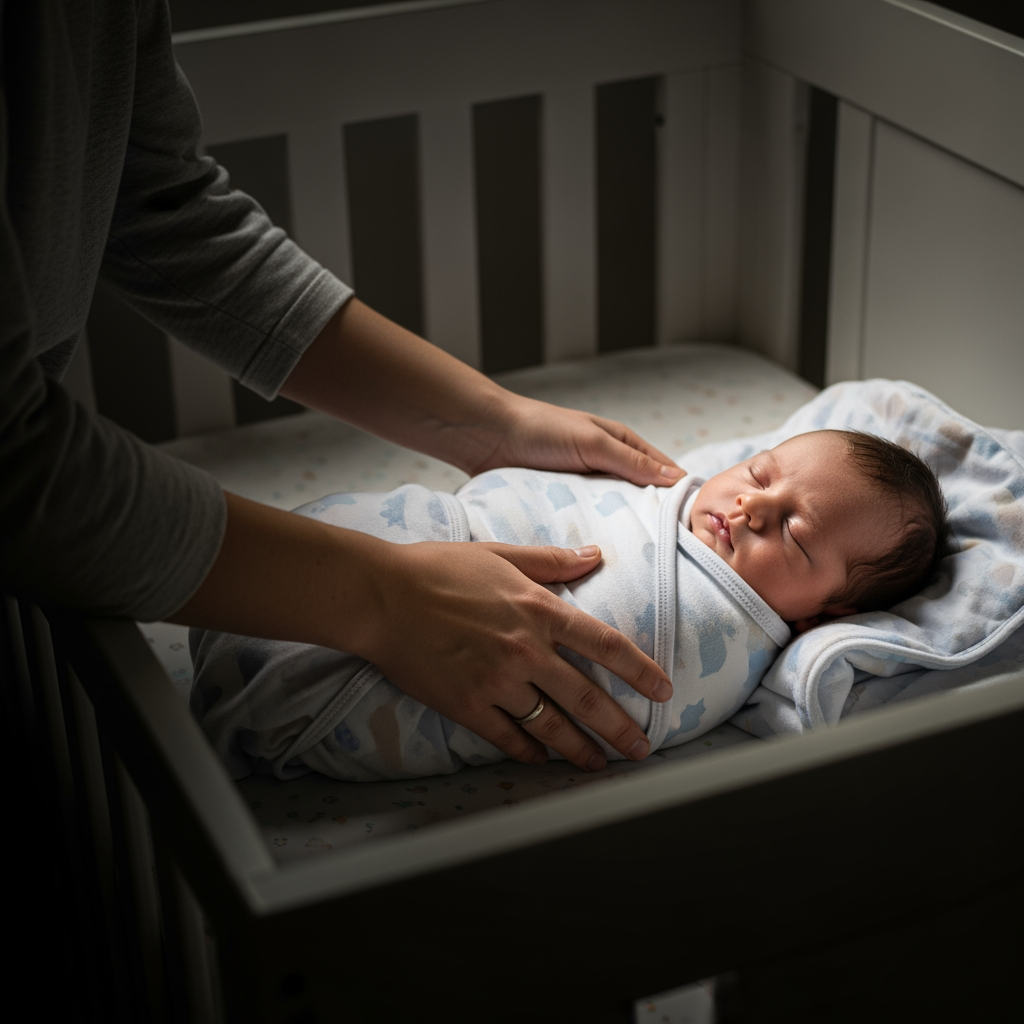
Understanding your baby's sleep cycle is also important. An adult sleep cycle is about 90 minutes long. A baby's sleep cycle is much shorter, around 45 to 60 minutes. This means they go through several cycles each night. Between each cycle, they have a brief, light waking. This is a normal part of sleep. If they have a sleep association that needs your help, they will fully wake up. They will cry for you to come and recreate that cue, whether it is rocking, feeding, or holding. The issue is not that your baby wakes up. The issue is that they cannot get back to sleep on their own. This is why you find yourself up every hour or two.
There are two main types of sleep associations. The first type is parent-led, or unsustainable. These require your direct involvement. The second type is baby-led, or sustainable. These are cues your baby can control on their own. The goal is to move from parent-led associations to baby-led ones. This shift empowers your baby to link their sleep cycles independently. It is the key to longer stretches of sleep for everyone.
Identifying which type of association your baby uses is the first step. Below is a clear comparison to help you pinpoint your situation. Recognizing your baby's current dependency is crucial for choosing the right path forward.
| Parent-Led (Unsustainable) Associations | Baby-Led (Sustainable) Associations |
|---|---|
| Needing to be fed or nursed to sleep | Sucking on thumb or fingers |
| Rocking, bouncing, or walking to sleep | Rubbing a lovey (for babies over 12 months) |
| Being held or cuddled until fully asleep | Listening to continuous white noise |
| Parent replacing a pacifier all night | Being in a familiar sleep sack |
| Falling asleep in a car seat or stroller | Sleeping in a dark, consistent environment |
| Parent's hand on chest until asleep | Being able to find and replace their own paci |
Sustainable associations like a sleep sack or white noise create a consistent sleep environment. They do not require you to intervene. Your baby can use these cues to self-soothe and fall back asleep independently. The journey ahead is about teaching your baby to rely on these positive cues instead of on you.
Is It Time for a Change? Key Signs Your Sleep Association is a Problem
Feeding or rocking a newborn to sleep is normal and natural. In the early months, this is often necessary. However, these habits can become problematic as your baby grows. Around the four-month mark, babies' sleep patterns mature. Their sleep cycles become more defined. This is when a parent-led sleep association can start causing major disruptions. If you are wondering whether your routine has become a problem, there are clear signs to look for. Recognizing these pain points is the first step toward making a change.

The most obvious sign is frequent night wakings. If your baby wakes every one to two hours, it is a strong indicator they need help connecting sleep cycles. Short naps are another major clue. Naps that last only 30-45 minutes are often called "disaster naps." This length matches a single sleep cycle. It means your baby wakes up and cannot get back to sleep without assistance. This leads to a buildup of sleep debt. An overtired baby is often fussy, cranky, and has an even harder time sleeping. It becomes a difficult cycle for both of you. This checklist can help you decide if it is time to make a change.
- You are waking every 1-3 hours to repeat the same action (rocking, feeding, etc.).
- Your baby cannot connect sleep cycles for naps, resulting in short 30-45 minute naps.
- Only ONE person (usually Mom) can get the baby to sleep.
- Bedtime takes an hour or more, and you feel like you're "trapped" holding a sleeping baby.
- You feel exhausted and resentful; the current routine is unsustainable for your mental health.
If you checked several items on this list, it is a strong sign that the current sleep situation is not working for your family. This is not a reflection of your parenting. It is simply a signal that your baby needs to learn a new skill. When only one parent can get the baby to sleep, it puts immense pressure on that person. It can also make it hard for the other parent to bond at bedtime. Long, drawn-out bedtimes can eat into your evening, leaving no time for rest or connection with your partner. Most importantly, if you feel your own mental health is suffering, that is the clearest sign of all. You cannot pour from an empty cup. Making a change will benefit both you and your baby.
Your Step-by-Step Plan: Choosing a Gentle Method That Works for You
Deciding to change a sleep association can feel overwhelming. You may worry about tears or disrupting your baby's routine. The good news is that there are many gentle methods available. You do not have to choose an approach that feels wrong for your family. The key is to be consistent and patient. This section outlines three different methods, from the most gradual to more direct. You can choose the level that best fits your baby's temperament and your parenting style. Remember, the goal is to empower your baby with the skills for independent sleep.

Level 1 (Gentlest): The "Habit Stacking" Method
This is the most gradual and least disruptive approach. The term was coined by sleep expert Lyndsey Hookway. The idea is to layer new, positive sleep associations on top of the old one. You do this for several weeks before you even start to remove the original association. This process helps your baby build a new set of comfort cues. It makes the final transition much smoother. This method is ideal for sensitive children or parents who want to avoid tears as much as possible. It requires a lot of patience, but the results are often long-lasting.
The core principle is to add, not subtract, at the beginning. You are building a bridge to a new way of sleeping. This helps your baby feel secure throughout the process. This method helps you teach your baby to self-soothe gently by slowly transferring their dependence from you to their own skills. Follow these steps carefully.
- Weeks 1-3 (ADD, Don't Subtract): Choose one or two new, sustainable associations. This could be a specific lullaby, a consistent shushing sound, or a firm hand on your baby's chest. Introduce these new cues while you perform the old association. For example, sing the lullaby and shush while you nurse your baby to sleep. Do this for every single sleep, including naps and bedtime. The goal is to make your baby associate the new cues with the comfort of the old one.
- Week 4 (Start the Fade): Continue with the new associations. Now, you can start to slightly reduce the old one. For a feed-to-sleep association, you might nurse until your baby is very drowsy but not fully asleep. Then, gently unlatch. Immediately rely on your new cues, like the shushing and hand on the chest, to get them the final 10% of the way to sleep. This is the first small step toward independent sleep.
- Week 5+ (Continue the Reduction): Each night, gradually reduce the original association a little more. You might nurse only until your baby is calm, then unlatch. Let the new habits do more of the work. This process is slow. It can take up to two or three months for some children. Be patient. The gentle nature of this method builds a strong foundation of sleep skills without causing distress.
Level 2 (The Bridge): Using a Pacifier to Wean from Feeding
Many babies have a strong need to suck for comfort. This is why the feed-to-sleep association is so common. For these babies, a pacifier can act as a "bridge." It allows them to meet their sucking need without relying on feeding. This method focuses on breaking the link between food and sleep first. Some parents worry that a pacifier is just trading one bad habit for another. However, a pacifier can be a very positive sleep tool. The American Academy of Pediatrics (AAP) notes that pacifier use at sleep time can reduce the risk of SIDS. The key is to eventually teach your baby to replace it themselves.
This strategy is especially helpful for parents who want to stop nursing to sleep gently. It separates the act of eating from the act of falling asleep. This is a crucial distinction for your baby to learn.
- Step 1 (Introduce the Pacifier): Pay attention during a feed. When your baby's sucking slows down and becomes more about comfort than eating, gently unlatch. Immediately offer a pacifier. Continue to cuddle or rock them to sleep with the pacifier. This teaches them that the pacifier can also provide sucking comfort.
- Step 2 (Separate Feeding & Sleeping): Make feeding the very first step of the bedtime routine. Do it in a bright, active room, not the dark bedroom. Your new routine should look something like this: Feed, then bath, then pajamas and sleep sack, then books. The final step is putting your baby into the crib with the pacifier, while they are still awake.
- Step 3 (Address the Pacifier): Once your baby no longer needs to feed to sleep, you have two choices. You can decide to remove the pacifier completely, often called going "cold turkey." Or, if your baby is around 7-8 months old, you can teach them to find it themselves. Scatter several pacifiers in the crib. During the day, practice playing a game of finding the pacifier. This skill will allow them to handle night wakings on their own.
Level 3 (Gradual Withdrawal): The Fading Method
This method is best for motion-based associations like rocking, bouncing, or walking. It is more direct than habit stacking but still very gentle. The goal is to do progressively less of the work each night. You slowly fade out your support until your baby is falling asleep on their own in their crib. This method can take anywhere from three days to three weeks. The timeline depends entirely on your baby's temperament. Some babies adapt quickly, while others need more time.
Consistency is vital with this method. Each step builds on the last. The table below shows a sample plan for breaking a rocking-to-sleep association. You can adapt this timeline to fit your baby's needs. If your baby gets very upset, it is okay to go back a step for a night or two before moving forward again. Exploring different rock to sleep alternative methods can provide additional strategies if rocking is your main challenge. The key is to reduce the amount of motion over time.
| Night(s) | Action | Goal |
|---|---|---|
| 1-3 | Rock until fully asleep. | Establish consistency. |
| 4-6 | Rock until very drowsy, place in crib awake. | Baby does the last 10% of falling asleep. |
| 7-9 | Rock only until calm, place in crib drowsy. | Baby does 50% of the work. |
| 10-12 | Stand beside crib with a hand on them, no rocking. | Remove motion completely. |
| 13+ | Slowly move away from the crib each night. | Achieve independent sleep. |
This gradual release of support helps your baby build confidence. They learn, step by step, that they are safe and capable of falling asleep without intense intervention. This method respects their need for comfort while gently guiding them toward a new skill.
Common Mistakes: 4 Pitfalls to Avoid When Changing Sleep Habits
Teaching a baby a new skill takes time and consistency. It is easy to get discouraged, especially when you are already sleep-deprived. A C.S. Mott Children's Hospital poll found that over 27% of parents struggle with getting their children to sleep. This is often due to a few common pitfalls. Knowing these mistakes ahead of time can help you avoid them. This will make the process smoother and more successful for your family.

Parents often undermine their own efforts without realizing it. The most well-intentioned plan can fail if these common errors are made. Being aware of them is half the battle. This will help you stay on track and achieve your goal of better sleep for everyone.
- Inconsistency: This is the number one reason sleep plans fail. One parent might hold firm, while the other gives in at 3 AM and rocks the baby to sleep. This sends mixed messages. Your baby gets confused and does not learn the new skill. You and your partner must be on the same page. Talk about the plan beforehand. Agree to support each other, even when it is hard.
- Bad Timing: Do not start sleep training during a major life event. This includes illness, teething pain, family travel, or a big developmental leap like learning to crawl. Your baby needs to feel their best to learn a new skill. Wait for a calm, boring week at home. This will set you both up for success.
- Giving Up Too Soon: The first few nights of any change are often the hardest. Your baby might protest the new routine. Progress is not always a straight line. You might have a great night followed by a rough one. This is normal. Stick with your chosen method for at least one full week before deciding it is not working. Consistency is what yields results.
- Accidentally Trading One Association for Another: Be careful not to replace one unsustainable habit with another. For example, you stop rocking your baby to sleep, but now you find yourself patting their back for 45 minutes until they are asleep. The ultimate goal is independent sleep. Any new comfort you introduce, like a hand on the chest, should also have a plan to be faded out over time.
Your Next Steps to a Quiet Night
You now have the tools and knowledge to make a positive change in your family's sleep. You understand that sleep associations are learned behaviors. You know the signs that show when a habit has become a problem. Most importantly, you have three clear, gentle methods to choose from. The path to better sleep is not about being harsh. It is about being consistent, patient, and responsive to your baby's needs while guiding them toward a new skill.

Remember that this journey is for the well-being of your entire family. The 2026 National Sleep Foundation Poll showed that 95% of families agree that good sleep is essential for overall family functioning. When your baby sleeps better, you sleep better. This allows you to be a more present, patient, and joyful parent during the day. This is not just about getting through the night; it is about improving your days.
Your next step is simple. Choose the method that feels right for you and your baby. Talk with your partner and commit to a plan together. Prepare for a few challenging nights, but stay focused on the long-term goal. You can do this. A quiet night and a well-rested family are within your reach. Start tonight.