You brought a white noise machine to help your baby sleep. It promises a world of peaceful nights and longer naps. But a nagging question keeps you up at night. Is the volume safe? You want to block out the noisy world for your little one. You also want to protect their tiny, delicate ears. This concern is not just valid; it is essential.
Many parents share this fear. You are right to question how loud is too loud. The wrong volume can pose risks to your baby's developing hearing. The good news is that there is a clear, safe way to use these helpful devices. Getting it right is easier than you think. You do not have to choose between your baby's sleep and their safety.
This guide provides a simple, actionable plan. We will show you the exact volume recommended by top pediatric experts. You will learn how to measure it easily using just your phone. We will also explore why some types of sound are better than others. By the end, you will have the confidence to create the perfect sound environment for safe and restful sleep.
The Science of Sound: Why Volume Matters for Your Baby
Understanding why volume is so critical starts with your baby's hearing. An infant's auditory system is not just a smaller version of an adult's. It is brand new and still developing. The ear canal itself is much smaller. This physical difference can make sounds seem louder to a baby than they do to you. Their ears are more sensitive and therefore more vulnerable to potential damage from loud noises. Think of their hearing as a delicate flower that needs protection to grow properly. This is why guidelines for infants are much stricter than for adults. What seems like a normal volume to you could be overwhelming for them.

To talk about loudness, we use a unit called the decibel, or dB. It is important to know that the decibel scale is not linear. It is logarithmic. This sounds complex, but the idea is simple. A small increase in decibels equals a huge jump in sound intensity. For example, 60 dB is ten times more intense than 50 dB. A sound at 70 dB is 100 times more intense than 50 dB. This is why even a slight adjustment on the volume dial can make a massive difference to your baby's ears. A 2014 study in the journal *Pediatrics* found that some infant sound machines, at their max volume, could produce over 85 dB. That is as loud as a vacuum cleaner or heavy city traffic. Prolonged exposure to levels this high can pose a significant risk of noise-induced hearing loss.
The goal of a sound machine is to activate a baby's calming reflex. This reflex is an infant's natural off-switch for crying. The steady, low-pitched sound mimics the environment of the womb. Inside the womb, sounds are deep and muffled. They are not sharp or piercingly loud. Your baby heard the constant whoosh of blood flow and your heartbeat. A white noise machine tries to recreate this soothing sensation. However, it must be done at a safe level. The aim is not to drown out all sound with extreme volume. It is to provide a consistent, comforting audio blanket. This blanket masks sudden, jarring noises like a dog barking or a door slamming. It helps your baby connect sleep cycles without being startled awake. Using sound safely supports this natural reflex without introducing any risk.
The "Goldilocks" Level: Official 2026 Safety Guidelines
When it comes to your baby's safety, you need clear, trusted advice. The most respected authority on child health is the American Academy of Pediatrics (AAP). The AAP has set guidelines for noise levels in hospital nurseries. These guidelines are the gold standard for creating a safe sound environment for infants. They recommend keeping continuous background noise at or below 50 decibels (dB). This level is considered the "just right" volume. It is loud enough to be effective for promoting sleep. Yet it is quiet enough to be completely safe for a baby's developing ears.
But volume is only half of the equation. Distance is just as important. Sound gets quieter as you move away from its source. The AAP recommends placing any sound machine at least 7 feet (about 2 meters) away from your baby's head. Never place a machine on the rail of the crib or inside the bassinet. This distance provides a crucial buffer. It ensures that the sound reaching your baby is dispersed and gentle. Even if a machine's lowest setting seems loud, increasing the distance will significantly lower the decibel level at the crib. Adhering to both the 50 dB volume and the 7-foot distance rule is the key to safe use.
Understanding what 50 decibels actually sounds like can be difficult. It is just a number. The table below helps put this level into context by comparing it to common household sounds. This will give you a real-world feel for the target volume you should aim for in your nursery.
| Sound Level (dB) | Example | Perceived Loudness |
|---|---|---|
| 30 dB | A soft whisper | Very Quiet |
| 50 dB | Quiet conversation, moderate rainfall | Quiet & Soothing |
| 60 dB | Normal conversation, running shower | Moderately Loud |
| 70 dB | Vacuum cleaner, TV audio | Loud |
| 85 dB | Blender, heavy city traffic | Very Loud / Risk of Damage |
As you can see, 50 dB is a gentle sound. It is not silent, but it is far from loud. Some parents worry this level is not enough to block disruptive noises, like traffic from a nearby street. It is crucial to resist the urge to crank the volume. The goal is to *mask* noises, not completely eliminate them. A steady 50 dB sound floor makes sudden noises less jarring. If outside noise is a major issue, consider other soundproofing methods. Heavy curtains, area rugs, or a draft stopper for the door can absorb sound safely. These are better alternatives than raising the white noise volume above the recommended safe limit.
A 4-Step Guide to Setting the Perfect Volume
Knowing the numbers is one thing. Applying them in your own home is another. You need a practical way to ensure your baby's sound machine is set perfectly. This simple, four-step guide removes all the guesswork. You can follow these steps tonight to create a safe and soothing sleep space. It empowers you to take control and find the correct white noise volume for your baby with confidence. This process works even if your machine only has vague settings like "low" and "high" instead of a numbered dial.
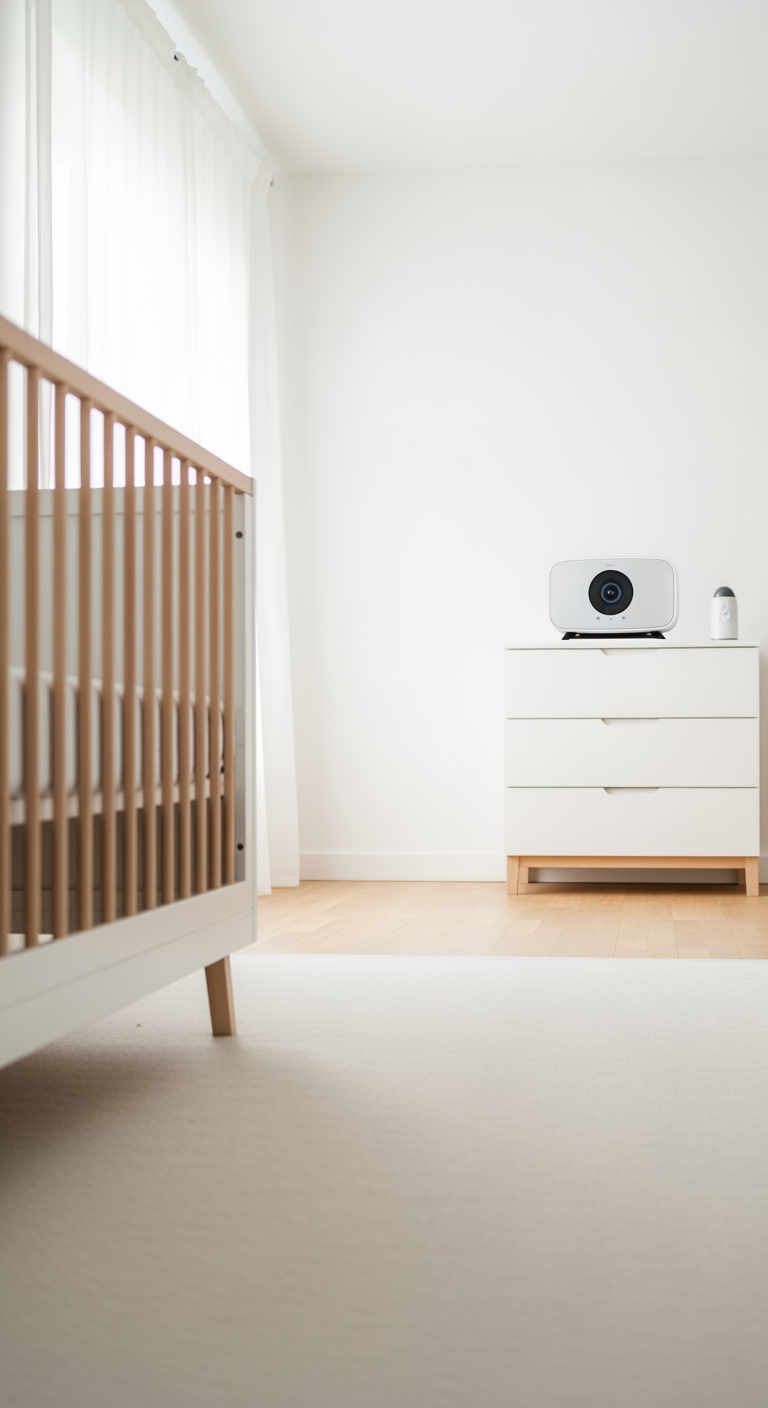
- Position the Machine: Start by placing the sound machine in the right spot. It must be at least 7 feet away from your baby's crib or bassinet. Measure this distance to be sure. This is the most important step for safety. Sound intensity drops quickly over distance. Placing the machine across the room significantly reduces the decibel level reaching your baby. Never put it on the crib rail, on a nightstand right next to the crib, or inside the crib itself. A dresser or shelf across the room is an ideal location.
- Download a Sound Meter App: You do not need to buy expensive professional equipment. Your smartphone is a powerful tool. Go to your phone's app store and search for a "decibel meter" or "sound level meter" app. Many free and reliable options are available, such as the NIOSH Sound Level Meter or Decibel X. While these apps are not as perfectly calibrated as a professional device, they are surprisingly accurate. They are more than sufficient for checking if the noise level is in the safe 50 dB range. This step is the key to knowing your machine's true output.
- Test from the Crib: Now it is time to measure. With your baby out of the room, turn on the sound machine. Open the decibel meter app on your phone. Place your phone directly inside the empty crib, right where your baby's head would normally be. This gives you the most accurate reading of what your baby actually hears. Watch the reading on the app. Adjust the volume on the machine until the app shows a consistent reading at or slightly below 50 dB. If your machine's lowest setting is still above 50 dB, move the machine even further away and test again. Distance is your best tool for volume control.
- Listen from the Doorway: Finally, use your own ears for a common-sense check. Stand in the doorway of the nursery. The sound should be a pleasant, background hum. It should not be intrusive or overwhelming. A great rule of thumb is that the white noise should be no louder than the sound of a running shower. You should be able to hold a quiet conversation with someone in the room without needing to raise your voice. If the sound feels too loud to you from the doorway, it is definitely too loud for your baby. Trust your instincts and turn it down.
Beyond White Noise: Why Pink or Brown Noise is a Safer, Better Choice
The term "white noise" is often used to describe any kind of steady, static-like sound. However, not all noise is created equal. Just like there are different colors of light, there are different "colors" of noise. The color refers to the mix of sound frequencies it contains. Understanding this difference can help you choose a more soothing and potentially more effective sound for your baby. While traditional white noise is popular, many audiologists and sleep experts now recommend pink or brown noise instead.

The main issue with pure white noise is its sound profile. It contains all audible frequencies at equal intensity. This results in a sound that can be perceived as hissy and somewhat harsh, like a detuned radio. For some infants, this high-frequency energy can be more irritating than calming. Pink and brown noise are engineered to be gentler on the ears. They still mask external sounds effectively, but they do so in a much softer way. They reduce the intensity of the higher frequencies, leading to a deeper, smoother sound. This profile is often compared to the sounds of nature, which our brains are wired to find calming.
Choosing a machine that offers different noise colors gives you more options. Some research suggests that pink noise in particular may lead to more stable, deep sleep. Here is a quick breakdown of the most common noise colors.
- White Noise: Hissing, static-like. It sounds like radio static. It is very effective at masking sounds but can be harsh for sensitive ears due to its high-frequency content.
- Pink Noise: Deeper, like steady rainfall or rustling leaves. The higher frequencies are less intense. Many experts prefer this for sleep as it is less harsh and may improve deep sleep quality.
- Brown Noise: Even deeper and more rumbling, like a strong waterfall or the low roar of a river. It has even less high-frequency energy than pink noise. It is very soothing for those who prefer very low-pitched sounds.
So, when choosing a sound machine, which is the better choice? A device with 20 sounds including lullabies, or one that focuses on high-quality pink noise? Based on sleep science, the machine with high-quality pink or brown noise is the more effective and future-proof option. While lullabies and nature sounds seem nice, they are often melodic and variable. This can be distracting to a baby's brain and prevent them from falling into a deep sleep. A consistent, boring, low-pitched sound floor is far more effective for sleep. Pink noise provides this consistency and is closer to the deep sounds your baby heard in the womb, making it a superior choice for both newborns and toddlers.
3 Common (But Risky) White Noise Mistakes to Avoid
Using a sound machine correctly involves more than just setting the right volume and picking the right color. Certain common habits can undermine its effectiveness and even introduce new problems. By avoiding these three frequent mistakes, you can ensure that the machine remains a helpful tool for your family's sleep journey, rather than becoming a source of stress or dependency. These practices are simple to adopt and make a big difference in the long run.
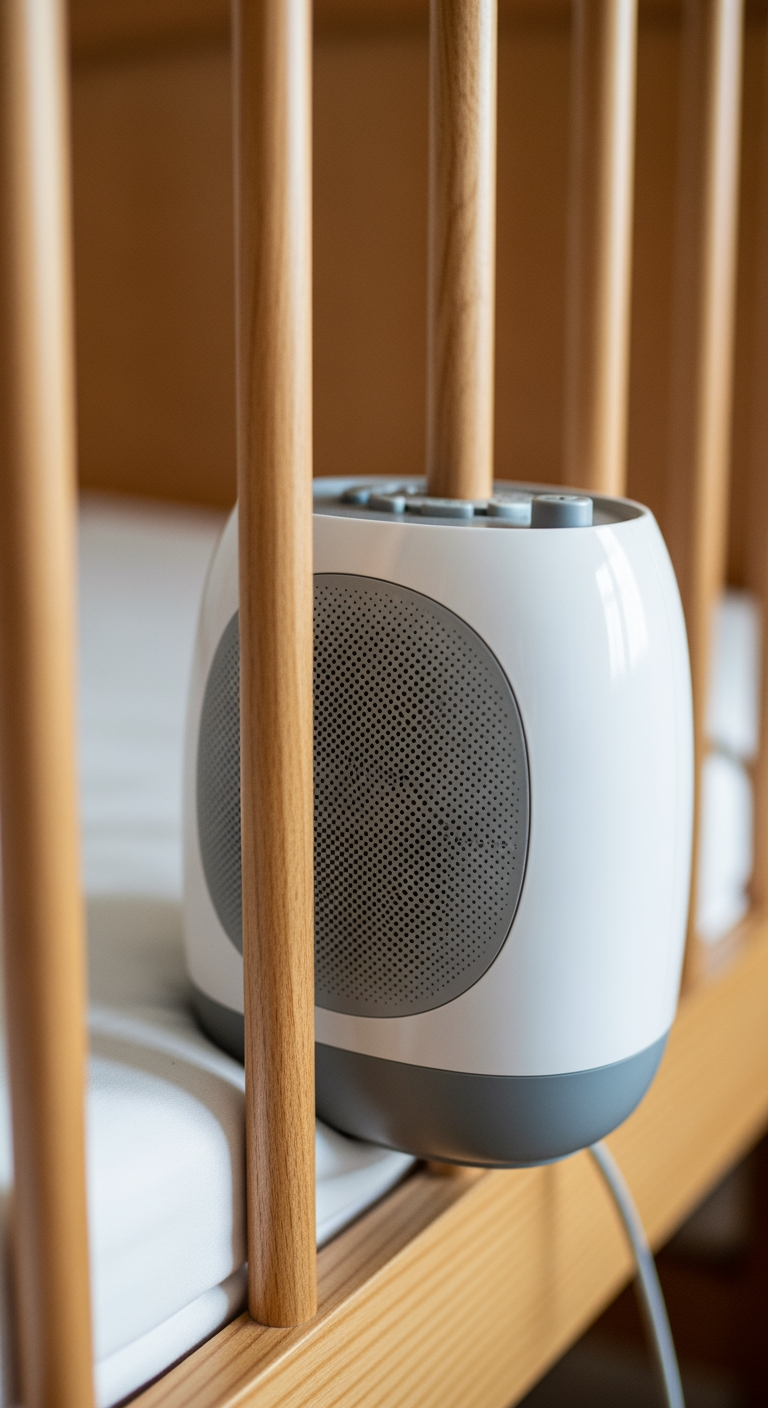
Mistake #1: Using It 24/7
It can be tempting to leave the soothing sound running all day and night. If it keeps the baby calm, why turn it off? However, constant use is not recommended. One of the goals of your baby's development is to learn to adapt to their environment. They need to get used to the normal sounds of a household. Hearing the dishwasher rumble, voices in the next room, or the vacuum cleaner are part of their sensory development. If the sound machine is always on, it can prevent them from acclimating to this normal daily soundscape. This can also lead to a strong sleep dependency, where the baby believes they cannot sleep without it. The best practice is to use the machine as a specific sleep cue. Turn it on just before naps and bedtime. Turn it off when they wake up.
Mistake #2: Forgetting the Timer
While using a sound machine all night at a safe volume (under 50 dB) is considered safe, it can reinforce sleep dependency. Many sound machines come with a built-in timer. Using this feature is a smart strategy. The machine's main job is to help your baby fall asleep and transition between sleep cycles. You can set the timer for 60 or 90 minutes. This is usually long enough to get them into a deep sleep. Once they are soundly asleep, the machine can turn off. This allows them to sleep in a quieter environment for the rest of the night. It also helps prevent the baby from becoming reliant on the sound to stay asleep. Using a timer is an excellent first step for eventually weaning your child off the machine when they are older.
Mistake #3: Using a Phone or Tablet
Using a white noise app on an old phone or tablet seems like a free and easy solution. However, it comes with several risks. First, the speakers on these devices are small and of poor quality. They often produce a tinny, high-pitched sound that is more irritating than soothing. They cannot replicate the deep, rich tones of pink or brown noise from a dedicated machine. Second, phones and tablets are sources of distraction and disruption. A notification, a phone call, or a low-battery alert can jolt your baby awake. Furthermore, leaving a device in or near the crib poses safety risks and exposes the baby to unnecessary blue light. A dedicated sound machine is a worthwhile investment. It is designed for one purpose: to produce a high-quality, consistent, and safe sound for sleep.
Your Next Steps for Peaceful, Safe Sleep
You now have a clear, evidence-based framework for using a white noise machine. You can feel confident that you are helping your baby sleep peacefully while protecting their hearing. The key takeaways are simple and powerful. Always keep the volume at or below 50 decibels. Always place the machine at least 7 feet away from the crib. Use your phone and a decibel meter app to verify the volume right where your baby sleeps. Finally, consider using deeper, gentler sounds like pink noise instead of traditional white noise.
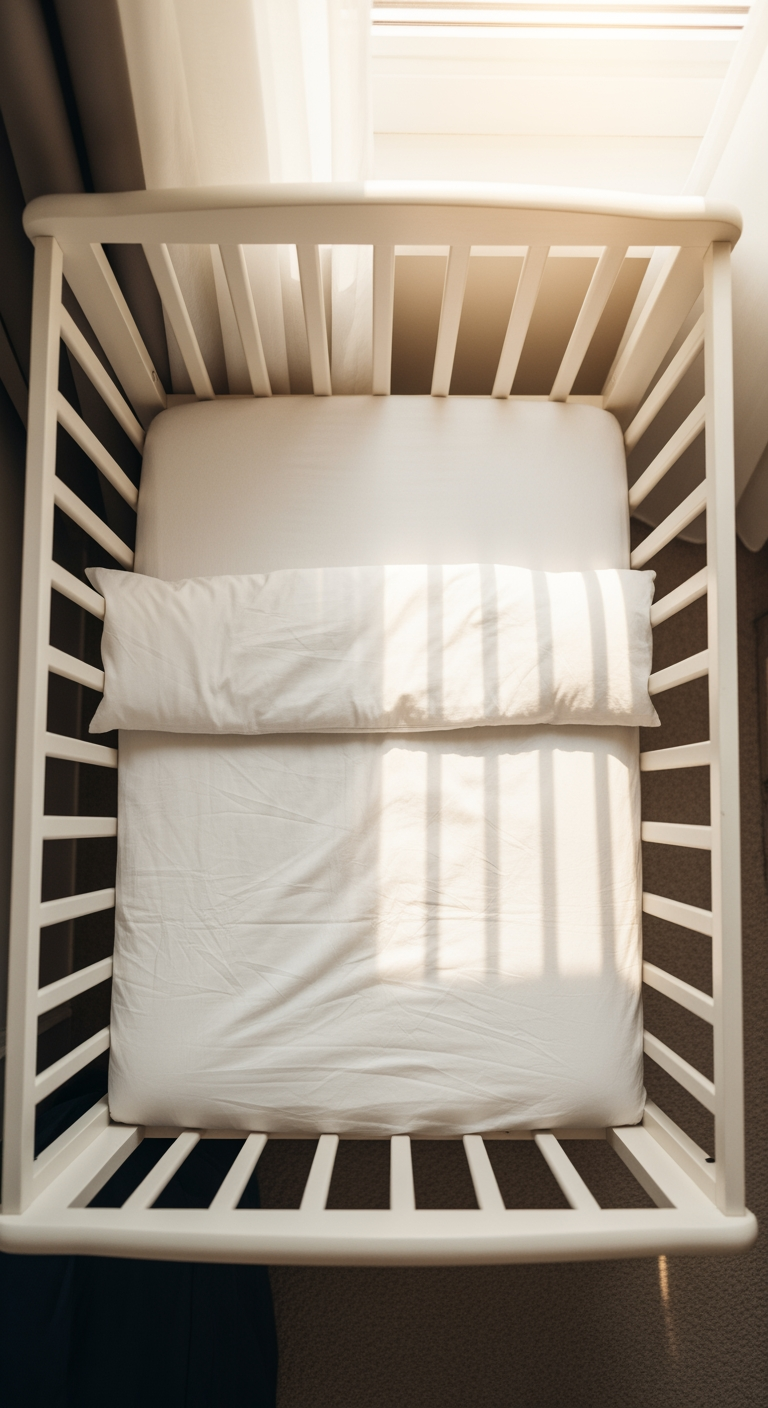
Remember that a sound machine is just one tool in your sleep toolkit. It works best as part of a larger strategy. A consistent bedtime routine, a dark and cool room, and appropriate sleepwear are all crucial pieces of the puzzle. Creating a predictable and calming environment signals to your baby that it is time for rest. By combining these elements, you build a strong foundation for healthy sleep habits that will last for years.
As your child grows, their sleep needs will change. White noise can help navigate sleep regressions and transitions. But a holistic approach is always best. Understanding your baby's unique sleep patterns and developmental stages is the key to long-term success. A comprehensive sleep strategy provides the guidance you need for every step of the journey, ensuring peaceful nights for the whole family.