
You place your baby down for their nap. You tiptoe out of the room, hopeful. You glance at the clock, planning what you can finally get done. Then, just as you start to relax, you hear it. A cry from the monitor. You check the time. It has only been 35 minutes. This is the frustrating reality for many parents dealing with a "catnapper." Your day is broken into tiny, unusable pieces. You feel exhausted, and you worry your baby is not getting the rest they need.
There is a solution. You can teach your baby to take longer, more restorative naps. This process is called nap extension. It involves using safe, gentle methods to help your baby connect their sleep cycles. When your baby learns this skill, they sleep longer. This means a happier, more well-rested baby. It also means you get a predictable break to recharge or manage your household.
This article will guide you through this process. We will first explain why short naps happen. Then, we will give you a toolkit of five safe and effective resettling techniques. You will learn how to choose the right method for your baby's age and temperament. With these tools, you can end the cycle of short naps for good.
The "Why": Understanding the 45-Minute Wake-Up Call
Understanding why your baby wakes up early is the first step to fixing the problem. The main reason for short naps is the structure of a baby's sleep cycle. An adult sleep cycle is long, lasting around 90 minutes. A baby's sleep cycle is much shorter. It typically lasts only 30 to 50 minutes. At the end of each short cycle, your baby enters a very light stage of sleep. They might stir, move around, or even open their eyes. This brief awakening is a normal part of their sleep pattern. The issue arises when they do not know how to fall back asleep for the next cycle. This is why so many naps end abruptly around the 30, 40, or 45-minute mark. They have completed one cycle and cannot start the next one without help.

Think of a baby's nap like a train ride with a quick stop. A full, long nap is a journey with two or three stops. A short nap is when your baby gets off the train at the first station, after only 45 minutes. Nap extension techniques are like gently encouraging them to stay on the train. You are helping them ride through that brief stop and continue the journey to a longer, more restorative sleep. The ability to connect sleep cycles is a learned skill. Most babies start developing this skill between 4 and 6 months of age. Before this, their sleep patterns are still organizing. By 6 months, their naps often become more regulated, making it a great time to focus on nap extension.
Two other concepts are vital to understand: sleep pressure and sleep associations. Sleep pressure is like a balloon. During your baby's wake time, you slowly inflate this balloon with activity and stimulation. For a good, long nap, you need the balloon to be full. This means your baby is tired enough to sleep deeply. If the balloon is not full enough (undertired), your baby will not have enough sleep pressure to stay asleep for long. They might wake up happy and playful after just 30 minutes. However, if the balloon is over-inflated (overtired), your baby's body releases stress hormones like cortisol. This makes it very hard for them to settle down and stay asleep, leading to crying and short naps.
A sleep association is like a key for a door. The door leads back to sleep. If the 'key' is always you rocking, feeding, or holding your baby to sleep, they depend on that key. When they wake between sleep cycles, they do not have the key to open the door back to sleep on their own. They need you to do it for them. The goal of nap extension is to help your baby develop their own key. This 'key' is the ability to self-soothe. Gentle resettling techniques provide just enough help for them to find their own way back to sleep without creating a new dependency on you.
Foundation First: Safe Sleep is Non-Negotiable
Before you try any resettling technique, you must ensure your baby's sleep space is perfectly safe. Your baby's safety is more important than the length of any nap. All methods discussed here are built on the foundation of safe sleep guidelines. These rules are not suggestions; they are essential for reducing the risk of Sudden Infant Death Syndrome (SIDS) and other sleep-related dangers. Adhering to these practices gives you peace of mind. It ensures that when you give your baby space to practice their sleep skills, they are in the safest possible environment. We follow the latest 2026 recommendations from the American Academy of Pediatrics (AAP) as the gold standard for infant sleep safety.
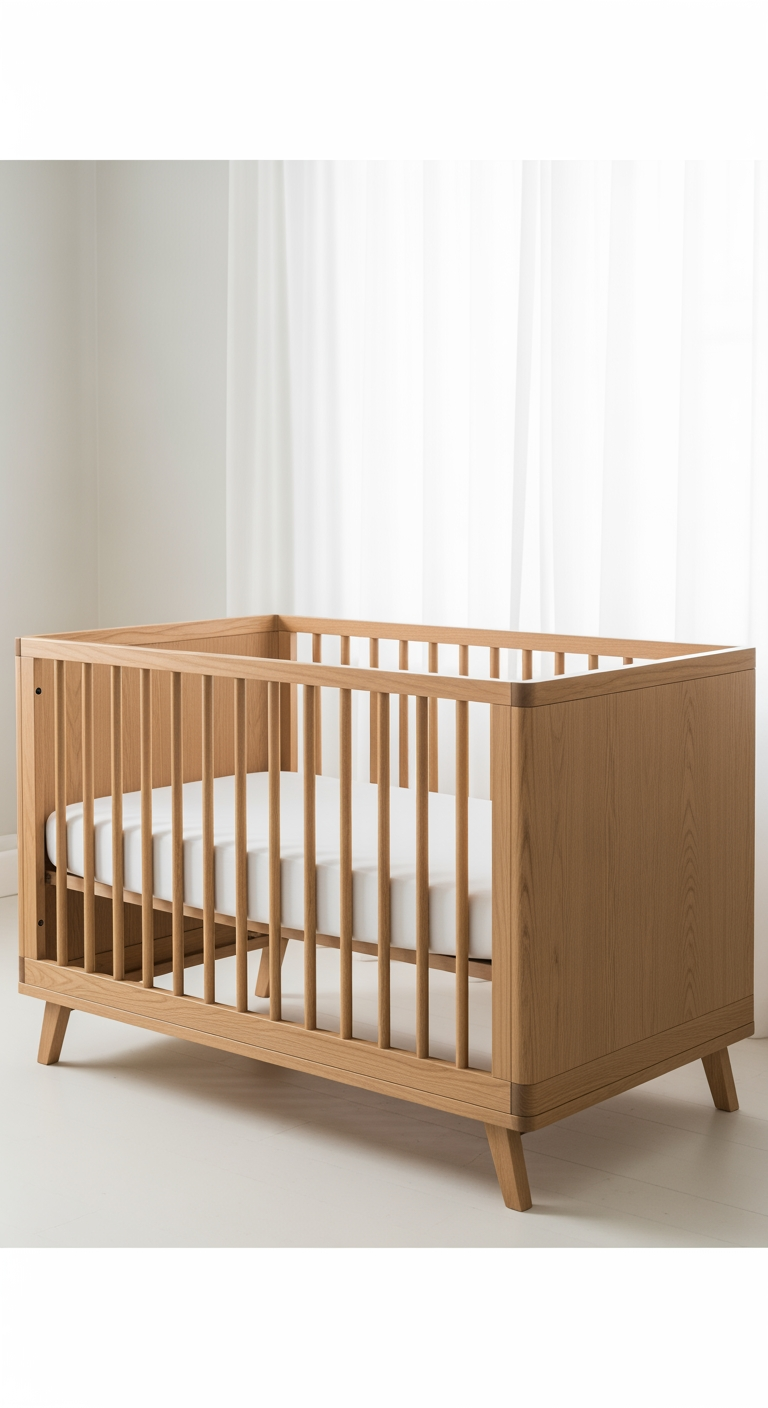
The sleep environment itself plays a huge role. A dark room can help promote the production of melatonin, the sleep hormone. Blackout curtains are a great tool for nap time. White noise can also be very helpful. It mimics the sounds of the womb and can block out household noises that might startle your baby awake between sleep cycles. Keep the room at a comfortable temperature, not too hot or too cold. A simple rule is to dress your baby in one more layer than you would wear comfortably. By optimizing the environment first, you set your baby up for success before you even begin a nap extension technique.
To make it easy to remember the core rules, you can use the ABCN method. This simple acronym covers the most critical aspects of creating a safe sleep space for your infant.
- A is for Alone. Your baby should always sleep alone in their own dedicated sleep space. This means no sharing a bed with parents, siblings, or pets. Bed-sharing greatly increases the risk of accidental suffocation and strangulation.
- B is for Back. Always place your baby on their back to sleep for every single sleep. This includes naps and nighttime. The "Back to Sleep" campaign has dramatically reduced the rate of SIDS. Once a baby can roll consistently from back to front and back again on their own, you can let them choose their own sleep position.
- C is for Crib. Your baby should sleep on a firm, flat surface in a safety-approved crib, bassinet, or play yard. The mattress should fit snugly with no gaps. Avoid letting your baby sleep in car seats, swings, or bouncers, as their airway can become compromised in an inclined position.
- N is for Nothing. The crib should be completely empty. Use only a fitted sheet. There should be no blankets, pillows, stuffed animals, or crib bumpers. These items are all suffocation hazards. Wearable blankets or sleep sacks are a safe way to keep your baby warm.
Committing to these rules is the most loving thing you can do for your baby. Once this safe foundation is firmly in place, you can confidently move on to teaching them the skill of longer naps.
The Toolkit: 5 Gentle & Safe Nap Resettling Techniques
Now that you understand the 'why' behind short naps and have established a safe sleep foundation, it is time to explore the 'how'. Here is a toolkit of five different resettling techniques. Each method offers a different level of parental involvement. You can find the one that best suits your baby and your parenting style. The key to success with any method is consistency. Choose a technique and try to stick with it for at least a week to give your baby a fair chance to learn. Remember, the goal is to provide just enough support to help them bridge that gap between sleep cycles, not to do all the work for them.

Technique 1: The Pause (The 5-10 Minute Rule)
This is the simplest and least intrusive method. It should always be your first line of defense against a short nap. When your baby first wakes up and fusses, resist the urge to rush in immediately. Instead, pause. Watch the monitor and wait for 5 to 10 minutes. Many parents are surprised to find that their baby will fuss, grunt, or even cry out for a few minutes before settling back down and falling asleep on their own. This brief period of fussing is often just the sound of a baby working their way from one sleep cycle into the next. By rushing in, you might fully wake them when they were on the verge of resettling independently. This technique gives your baby the space and opportunity to practice their self-soothing skills. It is most effective for babies aged 4 months and older who are just beginning to learn this skill.
It is important to learn the difference between a real cry and a 'transitional' cry. A transitional cry or fuss is often intermittent and not very intense. A cry that needs your help will typically be consistent and escalate in volume. The Pause allows you to assess the situation. If after 10 minutes the crying is getting more frantic, it is time to move on to a more hands-on technique. But always give them the chance to figure it out first. You are their coach, not their constant rescuer. This small change in your response can make a huge difference.
Technique 2: Rhythmic Reassurance (In-Crib Comfort)
If The Pause does not work and your baby's cries are escalating, Rhythmic Reassurance is your next step. This technique involves offering comfort while your baby remains in the crib. The goal is to reassure them that you are there without creating a habit where they need to be picked up to fall asleep. Go to your baby's side. Without making eye contact or talking too much, provide some form of rhythmic, calming touch. This could be placing a firm, steady hand on their chest or back. It could be gentle but firm patting on their bottom. Or you could lean in and make a loud, continuous 'shushing' sound close to their ear. The key is to be brief and boring. You are a calming presence, not a source of entertainment. Stay for a minute or two until they start to calm, then leave the room, even if they are not fully asleep. This helps them learn to do the last little bit of falling asleep on their own.
This method is excellent for babies who are calmed by your touch but might become overstimulated or confused by being picked up and put back down repeatedly. It directly addresses the need to resettle without creating unhelpful sleep associations like rocking to sleep. You are providing support within the sleep space, reinforcing that the crib is the place for sleep. It's a perfect middle ground between leaving them alone and a fully hands-on approach.
Technique 3: The Crib Hour Method
The Crib Hour method is a very effective strategy for older babies, typically 6 months and up, who already have some independent sleep skills. It is a powerful tool for teaching a baby's body clock about nap duration. The rule is simple: the nap opportunity lasts for one full hour from the moment your baby falls asleep. For example, if you put your baby down at 9:00 am and they fall asleep at 9:10 am, the crib hour ends at 10:10 am. If they wake up after 40 minutes at 9:50 am, you would leave them in the crib until 10:10 am. This provides a consistent window of time for them to practice falling back asleep. It removes the guesswork for you and creates a predictable routine for your baby. This method is safe when all safe sleep rules are followed.
A common myth is that Crib Hour means leaving your baby to cry for an hour. This is incorrect. Crib Hour is a timeframe, not a 'cry-it-out' command. During that remaining time in the crib, you can absolutely use other resettling techniques. You could try The Pause first. If that fails, you could use Rhythmic Reassurance. What if your baby wakes up happy and just babbles? You would still leave them in the crib for the remainder of the hour. This reinforces that this is quiet time. It helps their internal clock understand that nap time is not over yet. For a baby who gets hysterical with this method, it may be too much. In that case, you can offer more in-crib comfort or choose a different technique entirely.
Technique 4: Pick Up, Put Down
Pick Up, Put Down (PUPD) is a very hands-on method suitable for parents who want to be highly involved in the resettling process. It works best for babies in the 4 to 8-month age range. The process is exactly as it sounds. When your baby wakes early from a nap and starts crying, you go in and pick them up. You hold and comfort them only until they calm down and become drowsy. The moment they are calm, but before they are fully asleep, you place them back down in their crib. If they start to cry again, you repeat the process. You pick them up, calm them, and put them back down while they are still awake. This cycle is repeated until they finally fall asleep in the crib.
This method can be effective for babies who are quickly calmed by physical contact. However, it requires a great deal of patience from the parent, as you might repeat the cycle dozens of times in the beginning. It is also important to be aware that for some babies, the constant picking up can be overstimulating rather than calming. If you find that your baby becomes more frantic with each attempt, this is likely not the right technique for their temperament. For a 5-month-old who is used to being held for naps, this can be a good transition method to get them used to falling asleep in the crib, but you must be prepared for the repetition.
Technique 5: Nap Anticipation (or Wake-to-Sleep)
This technique is a proactive approach best suited for younger babies (around 3-5 months) who wake up from their naps at the exact same minute every single time. It is a bit like a magic trick, but it can be risky. The idea is to gently rouse your baby a few minutes *before* they typically wake up on their own. For example, if your baby always wakes at the 38-minute mark, you would go into their room at the 35-minute mark. You would then make a tiny, gentle movement to stir them. This could be a light touch on their back or a soft jostle of the mattress. The goal is to bring them to a more conscious state for just a second, which interrupts their sleep cycle. This interruption can help them connect to the next sleep cycle without fully waking up.
The main risk of this method is that you might wake your baby up completely, ending the nap then and there. If you try this and your baby becomes wide awake and will not go back to sleep, it is a sign that the method is not working for them. In that case, it is better to pivot to a safer alternative. A less risky approach would be to focus on The Pause or Rhythmic Reassurance after they wake. Nap Anticipation requires precise timing and a very gentle touch. It is often considered a last resort when other methods have not been successful for a habitual short napper.
How to Choose the Right Technique for Your Baby
With five different techniques, how do you know where to start? The best method depends on several factors. These include your baby's age, their unique temperament, and your own comfort level with crying and intervention. There is no single 'best' technique for every family. The goal is to find the best fit for your specific situation. A method that works wonders for one baby might be too stimulating for another. This guide and comparison table will help you make an informed decision. Think of yourself as a sleep detective, gathering clues about your baby to choose the most effective tool. Remember to start with the least intrusive method possible and only escalate as needed. This respects your baby's growing ability to learn new skills on their own.

For example, starting with 'The Pause' is almost always the right first step for any baby over 4 months old. It costs nothing and requires only a few minutes of observation. It gives you valuable information about how your baby handles that transition between cycles. If they can resettle on their own, your job is done! If they cannot, you have learned that they need more support, and you can move to a method like 'Rhythmic Reassurance'. For older babies who have already mastered falling asleep on their own at the beginning of the nap, the 'Crib Hour' provides the structure they need to consolidate that skill in the middle of the nap. Consider your own capacity as well. A technique like 'Pick Up, Put Down' requires immense physical and emotional stamina, which may not be realistic for an already exhausted parent. Choosing a method you can apply consistently is crucial for success.
| Technique | Best For Ages | Parental Involvement | Best For… |
|---|---|---|---|
| The Pause | 4+ months | Low (Observation only) | Babies who are just learning and might self-soothe if given a chance. |
| Rhythmic Reassurance | 4+ months | Medium (In-crib soothing) | Babies who are calmed by touch but may be overstimulated by being picked up. |
| Crib Hour | 6+ months (with independent sleep skills) | Varies (Can be low or high) | Creating a consistent practice window and teaching the body clock. |
| Pick Up, Put Down | 4-8 months | High (Repetitive lifting/soothing) | Parents who want a very hands-on approach and babies who calm quickly with contact. |
| Nap Anticipation | 3-5 months | High (Proactive intervention) | Habitual wakers who wake at the exact same minute of every nap. |
After reviewing the table, you can see a clear path. For almost everyone, the journey starts with The Pause. If that is not enough, Rhythmic Reassurance provides more support without creating bad habits. If you have an older baby who can fall asleep on their own, Crib Hour adds structure. Pick Up, Put Down is for the parent who wants to be very hands-on, and Nap Anticipation is a special tool for a very specific problem. Trust your instincts and your knowledge of your own child.
Troubleshooting: When Nap Extension Isn't Working
Sometimes, even with the best plan, things do not go as expected. It can be incredibly disheartening when you try a technique and it seems to make things worse. Do not give up. Troubleshooting is a normal part of the process. Sleep is not a straight line; it has ups and downs. Often, a small adjustment is all that is needed to get back on track. The key is to stay calm and analytical. Try to figure out the root cause of the issue instead of just forcing a method that is not working. This section covers some of the most common problems parents face and offers clear, actionable solutions to help you navigate these challenges.

Before you assume a technique has failed, make sure you have been consistent for at least five to seven days. It takes time for a baby to learn a new skill and for their body to adjust. If you have been consistent and are still struggling, it is time to investigate. The most common culprits are scheduling issues (wrong wake windows), developmental leaps (sleep regressions), or a mismatch between the technique and your baby's temperament. Let's look at specific scenarios and how to solve them.
- Problem: My baby gets more hysterical with resettling attempts. -> Solution: This is a classic sign that your baby is either overtired or the technique itself is too stimulating. An overtired baby has high levels of cortisol, which acts like adrenaline, making it almost impossible to calm down. Try shortening the wake window before the nap by 15 minutes. Also, consider the method. For a 7-month-old who gets hysterical during Crib Hour, instead of just leaving him, switch to a less intrusive method within that hour. Try Rhythmic Reassurance with a firm hand on his chest. If even that is too much, the 'Pick Up, Put Down' method might be too stimulating. The goal is to calm, not agitate.
- Problem: It has been 15-20 minutes of trying, and they are still wide awake. -> Solution: It is time to call it. The nap is over. Forcing a nap for too long will only create frustration for both of you and can lead to a negative association with the crib. End the resettling attempt, get your baby up, and expose them to daylight. Start the next wake window from the time you got them out of the crib, not from when they first woke up. This resets the clock for sleep pressure. You can then try for the next nap at the appropriate time. This is often called 'rescuing' the nap, but it is better to think of it as protecting the rest of the day's schedule.
- Problem: A technique used to work, but now it does not. -> Solution: Welcome to the world of baby development! This is a very common issue and usually points to a change in your baby's sleep needs. Check for signs of a sleep regression, which often coincides with major developmental milestones like crawling or pulling to stand. Their wake windows might also need adjusting. A baby who was on three naps might be ready to transition to two. This is a frequent issue around 6-9 months. If your 9-month-old's second nap is suddenly short, they might need a longer wake window before that nap to build enough sleep pressure. Their sleep needs are constantly evolving.
- Problem: My first nap is long, but the second nap is always short. -> Solution: This is very normal. Sleep pressure is highest in the morning after a full night of sleep, making the first nap of the day the easiest and often the longest. As the day goes on, sleep pressure for naps can decrease. For a 9-month-old on two naps, a short second nap is common. Instead of focusing on resettling, first look at the schedule. You may need to slightly extend the wake window between the first and second nap to ensure they are tired enough. A 30-45 minute catnap in the afternoon can still be enough to get them to bedtime without being overtired, so you may not even need to extend it.
Your Next Steps Toward Longer, Restful Naps
You now have a complete guide to understanding and solving short naps. You know that catnaps are caused by an inability to connect sleep cycles. You have a foundational commitment to safe sleep. And you have a toolkit of five distinct, gentle techniques to help your baby learn this important skill. The journey to longer naps is a process of teaching, not a quick fix. Your role is to be a patient and consistent coach for your baby.

The most important factor for success is consistency. Choose the method that feels right for you and your baby, and stick with it. Give it time to work. There will be good days and bad days. Progress is not always a straight line. Some days you will see a beautifully long nap, and the next day you might be back to 40 minutes. This is normal. Stay the course. Celebrate the small wins and do not get discouraged by the setbacks. You are providing your baby with a safe and consistent opportunity to learn, and that is what matters most.
Remember to always start with the basics: a safe sleep space, an optimized environment, and an age-appropriate schedule with the right wake windows. By controlling these factors, you set the stage for success. With patience and the right techniques, you can guide your baby toward longer, more restorative naps. This will lead to a happier baby and a more rested, predictable life for you. Feeling overwhelmed? Get a personalized, step-by-step nap plan from BabySleep.coach to take the guesswork out of longer naps.